


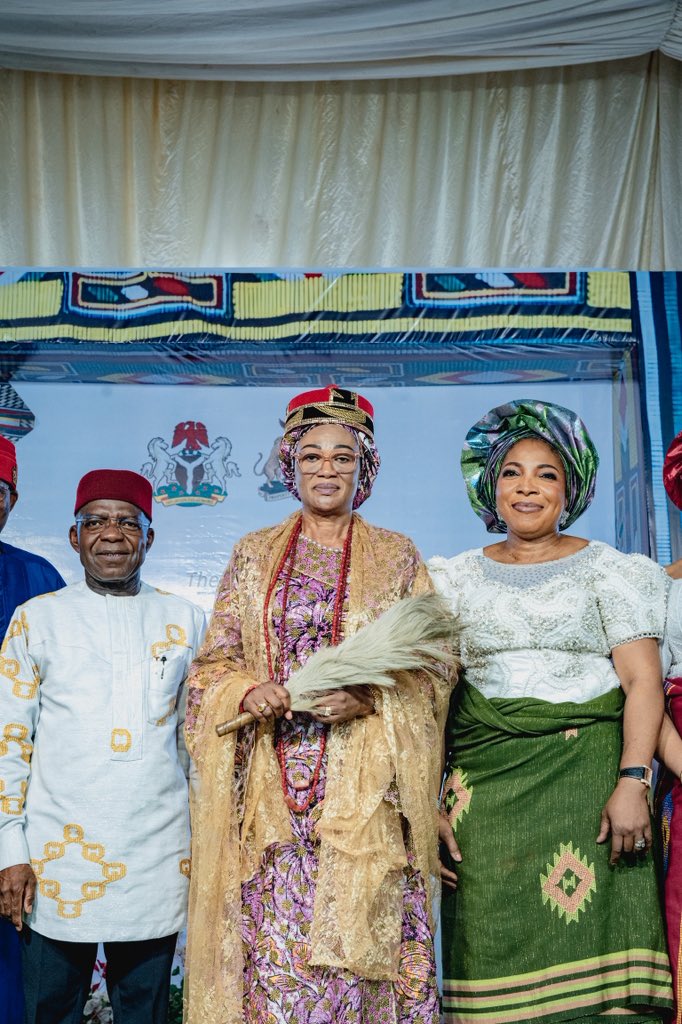
The Federal Government’s drive to promote Nigeria’s indigenous industries received a major boost on Tuesday as First Lady, Senator Oluremi Tinubu, announced a ₦2 billion intervention to revive the historic Akwete textile industry in Abia State.
The initiative is expected to strengthen local textile production, preserve one of Nigeria’s oldest weaving traditions and create new economic opportunities for artisans, particularly women who have sustained the craft for generations.
Speaking during a visit to the Akwete weaving community in Ukwa East Local Government Area of Abia State, the First Lady described the industry as an important part of Nigeria’s cultural identity that deserves greater investment and national recognition.
She said the intervention would support the expansion and modernization of Akwete textile production, improve the capacity of local weavers and encourage younger generations to embrace the centuries-old craft.
Mrs. Tinubu also urged Nigerians to patronise locally made fabrics, stressing that promoting indigenous products would not only preserve the nation’s rich cultural heritage but also stimulate economic growth, create employment and reduce dependence on imported textiles.
For decades, Akwete cloth has remained one of Nigeria’s most distinctive handwoven fabrics, renowned for its intricate patterns, durability and cultural significance. Despite its rich history and craftsmanship, the industry has struggled with inadequate investment, declining patronage and competition from imported textile products.
Industry observers believe the ₦2 billion intervention could mark a turning point if accompanied by sustained investment in modern production facilities, skills development, market access and branding capable of positioning Akwete fabric competitively in domestic and international markets.
The initiative also aligns with broader national efforts to diversify the economy through the promotion of local manufacturing, creative industries and cultural enterprises, sectors increasingly recognised for their potential to generate employment and boost non-oil revenue.
Stakeholders say the success of the programme will ultimately depend on transparent implementation, continued government support and active collaboration with artisans, private investors and development partners to ensure that the intervention delivers lasting economic and social benefits for the Akwete community and the country at large.