


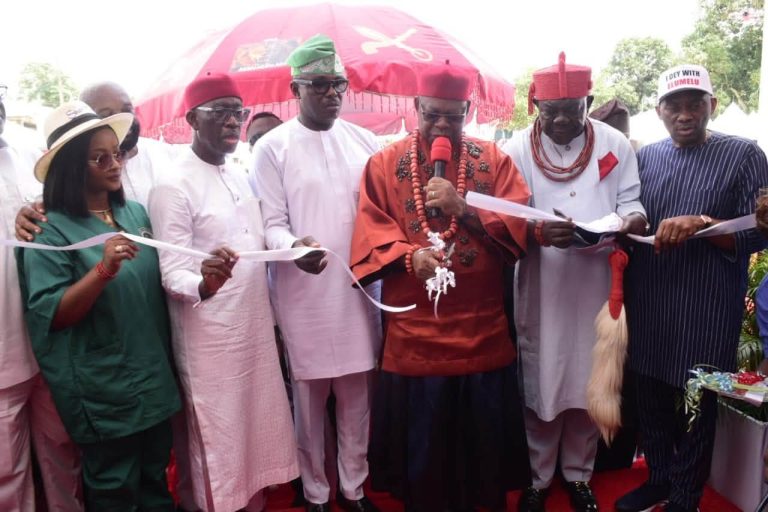
In Delta State, the newly commissioned Sheriff Oborevwori Cottage Hospital in Okpanam has emerged as a significant symbol of grassroots development in Oshimili North Local Government Area, offering residents a closer and potentially more accessible route to medical care.

But beyond the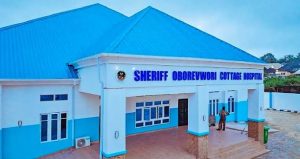 ceremony, speeches and ribbon-cutting lies a bigger story, the story of what purposeful local leadership can achieve when public resources are channelled into projects that respond directly to the needs of the people.
For the Executive Chairman of Oshimili North Local Government Area, Olorogun Hon. Innocent Esewezie, the state-of-the-art Sheriff Oborevwori Cottage Hospital is among the major projects associated with his administration as his tenure enters its final months.
For Esewezie, the hospital represents more than concrete, walls, equipment and consultation rooms. It reflects a philosophy that government should meet people where they live and respond to challenges that affect their everyday lives.
For residents who previously travelled farther in search of medical attention, the facility represents a bridge between healthcare services and the communities that need them. Pregnant women, children, elderly residents and other vulnerable members of the population now have the prospect of accessing essential medical services closer to home.
That explains the excitement that greeted the commissioning. For many residents, it was not simply another government ceremony; it was the arrival of an answer to a longstanding community need.
A House of Healing
The hospital can aptly be described as a house of healing with several doors.
Its consultation and treatment services provide an important entry point into healthcare, while surgical services create room for more advanced medical interventions. Dental services provide care for oral health, while optical services offer residents access to improved eye care.
Perhaps one of the most significant aspects of the facility is its provision for autistic children and other children with special needs.
That component sends an important message: grassroots development should not be measured solely by roads, buildings and other physical infrastructure. Meaningful development must also recognise people who require specialised care, compassion and inclusion.
It is, in that sense, a facility where vulnerable children should feel seen, supported and included.
The six-day Free Medical Care Programme launched alongside the facility further demonstrated the administration’s intention to connect infrastructure with actual service delivery. Residents were offered consultations, treatments and interventions, including surgical, dental and optical services.
Infrastructure acquires meaning when people can use it.
A hospital becomes a true community asset not simply when its doors are ceremonially opened, but when a mother walks through them seeking help, when a child receives treatment, when an elderly resident finds relief, or when a family receives medical attention without the burden of travelling long distances.
Beyond Buildings: Expanding Healthcare Access
Esewezie’s healthcare initiative also extends beyond physical infrastructure.
The immediate enrolment of 200 beneficiaries into the Delta State Contributory Health Commission programme adds another dimension to the project. The beneficiaries comprise 150 operatives of the Oshimili North Security Watch and 50 autistic children and children with special needs.
The initiative effectively combines healthcare infrastructure with access and financial protection, strengthening the broader objective of making healthcare more accessible to vulnerable residents.
Yet the cottage hospital is only one chapter in the wider development narrative of Oshimili North under Esewezie.
The facility stands alongside other projects completed by the administration, as well as initiatives completed or still underway as the tenure approaches its final months.
Together, they portray an administration attempting to race against the political clock while creating infrastructure capable of outliving the calendar of office.
Building Beyond the Political Calendar
This is perhaps one of the most enduring tests of local government leadership.
Political tenures are temporary, but the impact of functional public infrastructure can last for generations.
Administrations come and go, but a properly functioning hospital can continue serving residents long after its builders have left office. A good road can remain useful after the administration that constructed it has ended. A community facility can become part of the daily lives of residents who may never know the political details surrounding its construction.
Esewezie’s approach can therefore be likened to planting trees whose shade will be enjoyed long after the gardener has left the field.
The cottage hospital is one such tree.
Its ultimate legacy, however, will not be determined by the grandeur of its commissioning ceremony. It will be measured by the patients treated, lives improved, mothers assisted, children supported and families given hope when illness creates uncertainty.
State Recognition, Grassroots Ownership
Governor Sheriff Oborevwori, represented at the commissioning by his deputy, Sir Monday Onyeme, praised the Oshimili North council for initiating and executing the project while describing local government administrations as an important bridge between state government and grassroots communities.
The project also fits within the broader philosophy of the state’s M.O.R.E. Agenda and its emphasis on meaningful development and sustainable interventions.
But while state-level support and recognition are important, the most compelling feature of the project is its grassroots ownership.
It belongs to Oshimili North.
It belongs to the residents who gathered to celebrate its opening.
It belongs to the pregnant woman who can now seek medical attention closer to home. It belongs to the elderly resident who may no longer have to endure an exhausting journey before seeing a health professional. It belongs to children requiring treatment and families seeking reassurance when illness strikes.
That is why the hospital can aptly be described as a new heartbeat in the body of Oshimili North.
For Esewezie, it may ultimately become one of the clearest markers of his tenure—a physical reminder of an administration that sought to make local government something citizens could experience in tangible ways rather than merely encounter as an institution in political speeches.
The Race Against Time
With only a few months remaining, the administration is entering its final stretch.
Completed projects now stand like milestones along the road, while those still under construction represent chapters that must be carefully completed.
The challenge is therefore not merely to finish projects before leaving office. It is to build a legacy strong enough to withstand the passage of time.
In Okpanam, the Sheriff Oborevwori Cottage Hospital offers perhaps the strongest metaphor for that ambition.
It is a lighthouse against the darkness created by inadequate healthcare access; a bridge between grassroots residents and modern healthcare services; and a seed planted in Oshimili North whose benefits could extend well beyond one political tenure.
Esewezie’s grassroots development philosophy deserves recognition because it demonstrates what becomes possible when local leadership looks beyond ceremonies and political rhetoric and concentrates on projects that answer real community needs.
The cottage hospital is particularly significant because healthcare is not a luxury. It is a fundamental pillar of human dignity.
By investing in a facility designed to serve ordinary residents, including children with special needs, and complementing infrastructure with free medical services and health-insurance enrolment, Esewezie has demonstrated that grassroots development can be practical, humane and measurable.
This is development that wears the face of the people.
A Challenge to Local Government Leadership
Esewezie’s example should also challenge local government chairmen across Nigeria to think more ambitiously about what can be achieved with the resources available to them.
Local government autonomy and monthly federal allocations should not become excuses for waiting indefinitely for state or federal governments before communities receive meaningful development.
Within the limits of the law and available resources, local government administrations can identify urgent needs, establish priorities, mobilise internally generated revenue responsibly and pursue strategic partnerships where necessary.
Roads, healthcare centres, schools, water projects, sanitation, security support and other essential infrastructure can transform communities when leadership chooses action over excuses.
The future of Nigeria’s grassroots will not be built by waiting. It will be built by leaders willing to start with what they have and use available resources responsibly to address the needs of their people.
Esewezie’s record in Oshimili North offers a compelling reminder that a local government chairman can leave behind more than memories of political meetings and official ceremonies.
He can leave behind structures that continue speaking for him long after the ribbon has been cut.
And in Okpanam, the Sheriff Oborevwori Cottage Hospital may well become one of those enduring structures—a lasting symbol of what purposeful grassroots leadership can achieve when development is measured not merely by speeches, but by the lives touched and communities transformed.