


By Ighorue Deborah Ufuoma
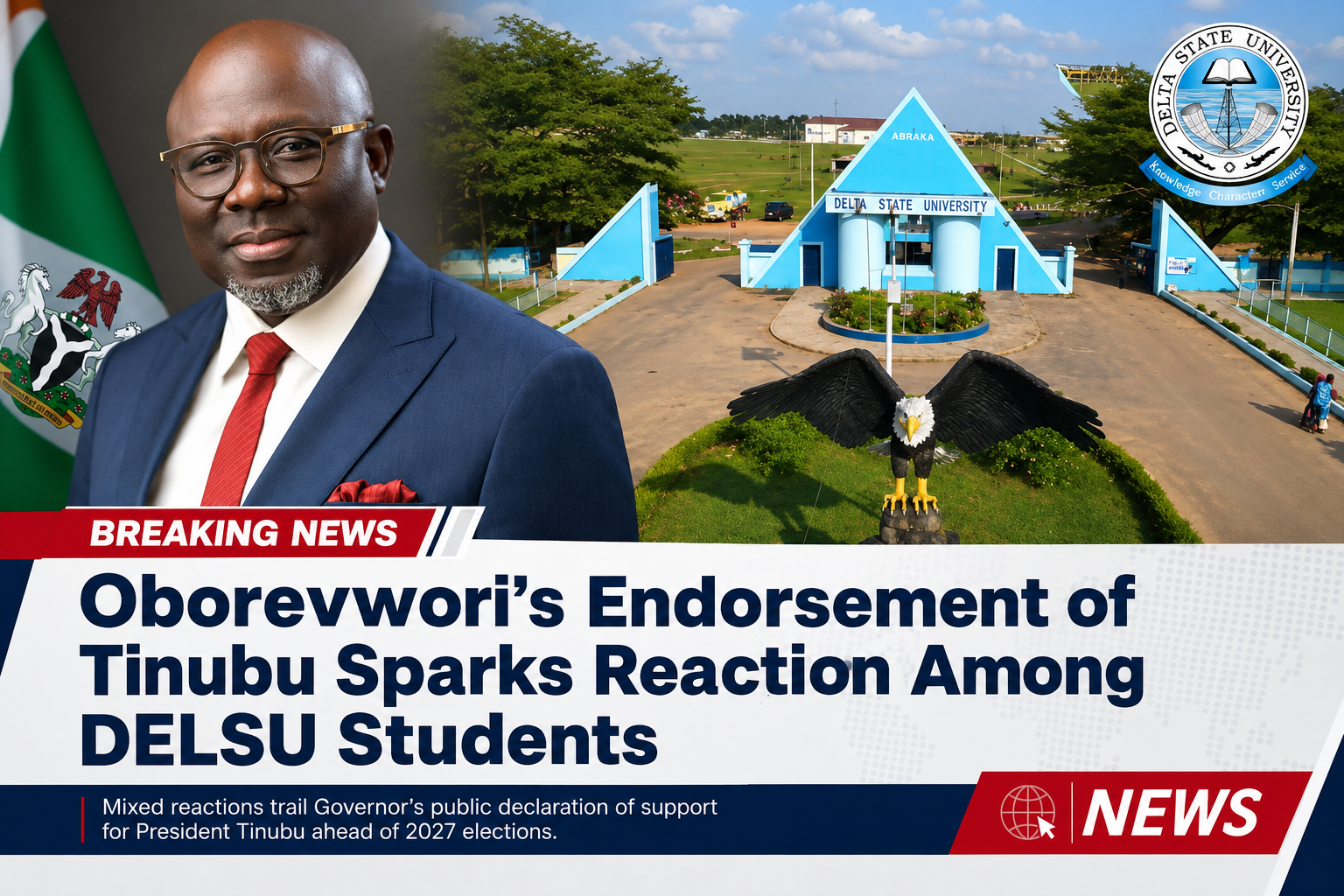
ABRAKA, Delta State — Governor Sheriff Oborevwori’s endorsement of President Bola Tinubu for a second term ahead of the 2027 general election has generated discussions among students of Delta State University (DELSU), Abraka, with many expressing differing opinions on the political development.
Governor Oborevwori publicly declared his support for President Tinubu’s re-election bid during an interaction with journalists in Asaba.
The governor said continuity in the Federal Government’s policies would further strengthen development efforts in Delta State, noting that increased federal allocations had enhanced the state’s ability to execute infrastructure projects and meet other development obligations.
The endorsement has since attracted reactions from political stakeholders and interest groups across Delta State, with analysts describing it as one of the early political developments likely to shape alignments ahead of the 2027 elections.
At DELSU, however, students who spoke with this reporter said their primary concern is not political endorsements but the impact government policies will have on education, infrastructure and employment opportunities.
A Students’ Union Government (SUG) executive, who requested anonymity, said students would judge the endorsement by its impact on the university community.
“We hear about political alignments every election season, but what matters to students is improved hostel facilities, stable electricity, conducive lecture halls and a better learning environment.
If the partnership between the state and federal governments brings more investment to education, then students will benefit,” the student said.
Also speaking, President Sheikh, a 200-level student of the Department of Mass Communication and Film, Faculty of Communication and Media Studies, expressed optimism that stronger cooperation between the state and Federal Government could translate into more opportunities for young people.
“Governor Oborevwori has demonstrated commitment to development in Delta State.
If that relationship with the Federal Government continues, students could benefit through improved infrastructure, scholarship opportunities and programmes that promote youth employment,” he said.
Another student, Ajiroghene Precious, also of the Department of Mass Communication and Film, urged students to assess political endorsements based on the outcomes they produce.
“Political endorsements are part of the democratic process. What is important is whether they result in policies that improve education, reduce the cost of schooling and create employment opportunities for graduates. Ultimately, citizens will judge leaders by their performance,” Precious said.
Some other students who spoke to this reporter said they would prefer to see greater attention given to issues affecting higher education, including hostel accommodation, research funding, campus security and graduate employment, regardless of political affiliations.
Political observers say issues such as economic reforms, infrastructure development, education, youth empowerment and job creation are expected to feature prominently in campaigns ahead of the 2027 general election, with students and young voters likely to play a significant role.
As discussions continue across the DELSU campus, many students say they will closely monitor how government policies and budgetary allocations affect the education sector in the coming months.
The views expressed by the students interviewed represent their personal opinions and do not reflect the official position of Delta State University.