The Association of Community Newspaper Publishers of Nigeria (ACNPN), Delta State Chapter, has congratulated the Delta State Government, led by Governor Rt. Hon. Sheriff Francis Oborevwori, and the people of the state on the occasion of the 35th anniversary of Delta State’s creation.
In a congratulatory message jointly signed by the State Chairman of ACNPN, Comrade Ike Philip Abiagom, and the State Secretary, Comrade Alaska Ekele, the association described the anniversary as a significant milestone that offers an opportunity to reflect on the state’s remarkable journey, achievements, and aspirations for a greater future.
The association noted that since its creation on August 27, 1991, Delta State has witnessed tremendous growth in infrastructure, education, healthcare, agriculture, commerce, and human capital development, positioning it among Nigeria’s most progressive states.
ACNPN commended Governor Oborevwori for his commitment to the development of the state through the implementation of his MORE Agenda, which it said has continued to positively impact communities across the three senatorial districts.
According to the association, the administration has demonstrated dedication to inclusive governance, road infrastructure, healthcare delivery, youth empowerment, economic growth, and the overall well-being of Deltans.
The statement read in part: “As Delta State celebrates its 35th anniversary, we congratulate His Excellency, Rt. Hon. Sheriff Francis Oborevwori, the government, and the good people of Delta State on this historic occasion. We are proud of the progress our state has made over the years and the enduring spirit of unity, resilience, and enterprise demonstrated by our people.
ACNPN also expressed appreciation to past and present leaders whose contributions have helped shape the state’s development trajectory, while urging the current administration to sustain its developmental initiatives for the benefit of future generations.
The association called on all Deltans, irrespective of political, ethnic, or religious affiliations, to continue supporting government policies and programmes aimed at promoting peace, unity, and sustainable development throughout the state.
Reaffirming its commitment to responsible journalism and grassroots information dissemination, ACNPN stressed that the media remains a vital partner in fostering good governance, accountability, and community development.
The association further wished Delta State continued peace, progress, and prosperity, while encouraging Governor Oborevwori and his executive team to remain steadfast in their efforts to make the state more vibrant, economically competitive, and a model of development in Nigeria.
As Delta State marks 35 years of existence, ACNPN expressed optimism that the state’s best days lie ahead and that even greater achievements will be recorded through visionary leadership and the collective support of its citizens.
In Delta State, the newly commissioned Sheriff Oborevwori Cottage Hospital in Okpanam has emerged as a significant symbol of grassroots development in Oshimili North Local Government Area, offering residents a closer and potentially more accessible route to medical care.
Olorogun Hon. Innocent Esewezie
But beyond the ceremony, speeches and ribbon-cutting lies a bigger story, the story of what purposeful local leadership can achieve when public resources are channelled into projects that respond directly to the needs of the people.
For the Executive Chairman of Oshimili North Local Government Area, Olorogun Hon. Innocent Esewezie, the state-of-the-art Sheriff Oborevwori Cottage Hospital is among the major projects associated with his administration as his tenure enters its final months.
For Esewezie, the hospital represents more than concrete, walls, equipment and consultation rooms. It reflects a philosophy that government should meet people where they live and respond to challenges that affect their everyday lives.
For residents who previously travelled farther in search of medical attention, the facility represents a bridge between healthcare services and the communities that need them. Pregnant women, children, elderly residents and other vulnerable members of the population now have the prospect of accessing essential medical services closer to home.
That explains the excitement that greeted the commissioning. For many residents, it was not simply another government ceremony; it was the arrival of an answer to a longstanding community need.
A House of Healing
The hospital can aptly be described as a house of healing with several doors.
Its consultation and treatment services provide an important entry point into healthcare, while surgical services create room for more advanced medical interventions. Dental services provide care for oral health, while optical services offer residents access to improved eye care.
Perhaps one of the most significant aspects of the facility is its provision for autistic children and other children with special needs.
That component sends an important message: grassroots development should not be measured solely by roads, buildings and other physical infrastructure. Meaningful development must also recognise people who require specialised care, compassion and inclusion.
It is, in that sense, a facility where vulnerable children should feel seen, supported and included.
The six-day Free Medical Care Programme launched alongside the facility further demonstrated the administration’s intention to connect infrastructure with actual service delivery. Residents were offered consultations, treatments and interventions, including surgical, dental and optical services.
Infrastructure acquires meaning when people can use it.
A hospital becomes a true community asset not simply when its doors are ceremonially opened, but when a mother walks through them seeking help, when a child receives treatment, when an elderly resident finds relief, or when a family receives medical attention without the burden of travelling long distances.
Beyond Buildings: Expanding Healthcare Access
Esewezie’s healthcare initiative also extends beyond physical infrastructure.
The immediate enrolment of 200 beneficiaries into the Delta State Contributory Health Commission programme adds another dimension to the project. The beneficiaries comprise 150 operatives of the Oshimili North Security Watch and 50 autistic children and children with special needs.
The initiative effectively combines healthcare infrastructure with access and financial protection, strengthening the broader objective of making healthcare more accessible to vulnerable residents.
Yet the cottage hospital is only one chapter in the wider development narrative of Oshimili North under Esewezie.
The facility stands alongside other projects completed by the administration, as well as initiatives completed or still underway as the tenure approaches its final months.
Together, they portray an administration attempting to race against the political clock while creating infrastructure capable of outliving the calendar of office.
Building Beyond the Political Calendar
This is perhaps one of the most enduring tests of local government leadership.
Political tenures are temporary, but the impact of functional public infrastructure can last for generations.
Administrations come and go, but a properly functioning hospital can continue serving residents long after its builders have left office. A good road can remain useful after the administration that constructed it has ended. A community facility can become part of the daily lives of residents who may never know the political details surrounding its construction.
Esewezie’s approach can therefore be likened to planting trees whose shade will be enjoyed long after the gardener has left the field.
The cottage hospital is one such tree.
Its ultimate legacy, however, will not be determined by the grandeur of its commissioning ceremony. It will be measured by the patients treated, lives improved, mothers assisted, children supported and families given hope when illness creates uncertainty.
State Recognition, Grassroots Ownership
Governor Sheriff Oborevwori, represented at the commissioning by his deputy, Sir Monday Onyeme, praised the Oshimili North council for initiating and executing the project while describing local government administrations as an important bridge between state government and grassroots communities.
The project also fits within the broader philosophy of the state’s M.O.R.E. Agenda and its emphasis on meaningful development and sustainable interventions.
But while state-level support and recognition are important, the most compelling feature of the project is its grassroots ownership.
It belongs to Oshimili North.
It belongs to the residents who gathered to celebrate its opening.
It belongs to the pregnant woman who can now seek medical attention closer to home. It belongs to the elderly resident who may no longer have to endure an exhausting journey before seeing a health professional. It belongs to children requiring treatment and families seeking reassurance when illness strikes.
That is why the hospital can aptly be described as a new heartbeat in the body of Oshimili North.
For Esewezie, it may ultimately become one of the clearest markers of his tenure—a physical reminder of an administration that sought to make local government something citizens could experience in tangible ways rather than merely encounter as an institution in political speeches.
The Race Against Time
With only a few months remaining, the administration is entering its final stretch.
Completed projects now stand like milestones along the road, while those still under construction represent chapters that must be carefully completed.
The challenge is therefore not merely to finish projects before leaving office. It is to build a legacy strong enough to withstand the passage of time.
In Okpanam, the Sheriff Oborevwori Cottage Hospital offers perhaps the strongest metaphor for that ambition.
It is a lighthouse against the darkness created by inadequate healthcare access; a bridge between grassroots residents and modern healthcare services; and a seed planted in Oshimili North whose benefits could extend well beyond one political tenure.
Esewezie’s grassroots development philosophy deserves recognition because it demonstrates what becomes possible when local leadership looks beyond ceremonies and political rhetoric and concentrates on projects that answer real community needs.
The cottage hospital is particularly significant because healthcare is not a luxury. It is a fundamental pillar of human dignity.
By investing in a facility designed to serve ordinary residents, including children with special needs, and complementing infrastructure with free medical services and health-insurance enrolment, Esewezie has demonstrated that grassroots development can be practical, humane and measurable.
This is development that wears the face of the people.
A Challenge to Local Government Leadership
Esewezie’s example should also challenge local government chairmen across Nigeria to think more ambitiously about what can be achieved with the resources available to them.
Local government autonomy and monthly federal allocations should not become excuses for waiting indefinitely for state or federal governments before communities receive meaningful development.
Within the limits of the law and available resources, local government administrations can identify urgent needs, establish priorities, mobilise internally generated revenue responsibly and pursue strategic partnerships where necessary.
Roads, healthcare centres, schools, water projects, sanitation, security support and other essential infrastructure can transform communities when leadership chooses action over excuses.
The future of Nigeria’s grassroots will not be built by waiting. It will be built by leaders willing to start with what they have and use available resources responsibly to address the needs of their people.
Esewezie’s record in Oshimili North offers a compelling reminder that a local government chairman can leave behind more than memories of political meetings and official ceremonies.
He can leave behind structures that continue speaking for him long after the ribbon has been cut.
And in Okpanam, the Sheriff Oborevwori Cottage Hospital may well become one of those enduring structures—a lasting symbol of what purposeful grassroots leadership can achieve when development is measured not merely by speeches, but by the lives touched and communities transformed.
The Executive Chairman of Oshimili North Local Government Area, Hon. Innocent Esewezie, has congratulated the Governor of Delta State, Rt. Hon. Sheriff Oborevwori, as well as the government and people of the state on the 35th anniversary of the creation of Delta State.
In a goodwill message made available to newsmen at his office on Wednesday, Esewezie described August 27, 1991, as a historic milestone in the collective journey of the people of Delta State.
He said the anniversary was an opportunity to celebrate the sacrifices, resilience and contributions of generations of Deltans who have worked tirelessly to build and advance the state.
According to him, the celebration should also inspire renewed commitment to unity, good governance and sustainable development.
“This anniversary is not only a celebration of our journey as a people, but also an opportunity to reflect on our shared achievements, the challenges we have overcome, and the greater possibilities that lie ahead.
“Delta State is richly blessed with abundant human and natural resources, but our greatest strength remains the resilience, enterprise, unity and indomitable spirit of our people.”
Esewezie particularly commended Governor Oborevwori for what he described as purposeful and people-centred leadership, noting that his administration had made significant strides in infrastructure, human capital development, economic empowerment, peace and inclusive governance.
He said these efforts were contributing to the foundation for a more prosperous Delta State.
The council chairman also reaffirmed his administration’s commitment to supporting policies and programmes that promote good governance, sustainable development, peace, social inclusion and an improved quality of life for residents of Oshimili North.
“We will continue to work closely with the State Government and other stakeholders in advancing the development of our communities and contributing meaningfully to the growth of Delta State.”
Esewezie paid tribute to Deltans, past and present, who have contributed their time, resources, talents and lives towards the peace and development of the state.
The Executive Chairman of Oshimili North Local Government Area, Olorogun Hon. Chief Innocent Esewezie, has been honoured with an Award of Excellence by the Delta State Contributory Health Commission for his commitment to expanding healthcare access and promoting health insurance coverage among residents.
The award was presented on Tuesday by the Director-General of the Delta State Contributory Health Commission, Hon. Dr. Isaac Akpoveta, during the commissioning of the ultra-modern Sheriff Oborevwori Cottage Hospital in Okpanam.
The hospital is a major healthcare project executed by the Oshimili North Local Government Council under the leadership of Chief Esewezie.
The recognition followed the successful registration of hundreds of residents into the Delta State Contributory Health Insurance Scheme through the intervention of the council administration.
Presenting the award, Dr. Akpoveta commended Chief Esewezie for demonstrating what he described as visionary leadership in healthcare, noting that the administration had combined the provision of modern medical infrastructure with efforts to ensure residents could access healthcare without being overwhelmed by medical costs.
According to him, the Oshimili North model demonstrates how local government administrations can deploy available resources to projects that have a direct impact on the welfare of citizens.
He urged other local government chairmen across Delta State and Nigeria to emulate the initiative, particularly by encouraging greater participation in contributory health insurance schemes as part of efforts to achieve Universal Health Coverage.
“Healthcare goes beyond building hospitals; it also involves ensuring that people can access medical services without financial hardship. This is exactly what Chief Esewezie has achieved,” Dr. Akpoveta stated.
The presentation of the award attracted applause from dignitaries, government officials, traditional rulers, healthcare professionals, community leaders and residents who attended the commissioning ceremony.
The newly commissioned Sheriff Oborevwori Cottage Hospital has been described as a major addition to healthcare infrastructure in Oshimili North, with modern medical equipment intended to improve healthcare delivery to residents of Okpanam and neighbouring communities.
Speaking on the significance of the project, APC chieftain, Chief Kizito Ijeh, commended Chief Esewezie for what he described as the prudent management of public resources.
He said the successful completion of the hospital demonstrated how available resources could be translated into visible, people-oriented development projects.
The occasion also witnessed the launch of a six-day free medical and surgical outreach programme organised by the Oshimili North Local Government Council.
The outreach is providing residents with free medical consultations, treatment, medications and surgical procedures, with particular attention to vulnerable and low-income residents.
Also speaking, the Chairman of the All Progressives Congress (APC) in Oshimili North, Mr. Austin Nnabuife, popularly known as Ojegbue, described the combination of the new healthcare facility, free medical outreach and expanded health insurance coverage as a significant milestone in grassroots healthcare development.
He said the initiatives reflected the administration’s commitment to improving the wellbeing of residents and making quality healthcare more accessible.
For Chief Esewezie, the Award of Excellence represents recognition of an approach to healthcare that combines infrastructure development, medical intervention and health insurance protection.
The event therefore marked another milestone in Oshimili North Local Government’s efforts to strengthen healthcare delivery, expand access to medical services and improve the quality of life of residents.
NASHVILLE, Tennessee — Country music legend, songwriter, actress and philanthropist Dolly Parton has died at the age of 80.
Parton’s death was announced on Tuesday, August 25, 2026, by her family. She reportedly died peacefully in Nashville, bringing to an end a remarkable career that spanned more than six decades.
Widely regarded as one of the most influential figures in country music, Parton rose from humble beginnings in rural Tennessee to become a global entertainment icon. Her distinctive voice, songwriting ability, humour and larger-than-life personality made her one of the most recognisable performers in the world.
She leaves behind a catalogue of enduring songs, including “Jolene,” “9 to 5,” “Coat of Many Colors” and “I Will Always Love You,” which became a worldwide hit after Whitney Houston recorded her celebrated version.
Beyond music, Parton built a successful career in film and business, starring in movies including 9 to 5 and Steel Magnolias and founding the Dollywood theme park in Tennessee.
But her legacy extended far beyond entertainment.
Parton was widely admired for her philanthropy, particularly her commitment to childhood literacy through the Dolly Parton’s Imagination Library, which provides books to children. She also contributed to COVID-19 vaccine research and supported numerous educational and community initiatives.
During her career, Parton won 11 Grammy Awards and earned induction into both the Country Music Hall of Fame and Rock & Roll Hall of Fame, among numerous other honours. She also became one of the best-selling female country artists in history.
Her death comes after a period in which she had acknowledged experiencing health challenges. Days before her death, Parton spoke about taking time to address health issues that she said she had previously neglected while caring for her late husband, Carl Dean, who died in March 2025.
Parton’s passing has prompted an outpouring of tributes from fellow entertainers, public figures and fans around the world, many remembering her not only for her music but also for her generosity, warmth and ability to connect with people across generations.
From a poor childhood in Tennessee to global superstardom, Dolly Parton built a career that transcended music. Her songs will continue to be performed, her stories remembered and her charitable work carried forward.
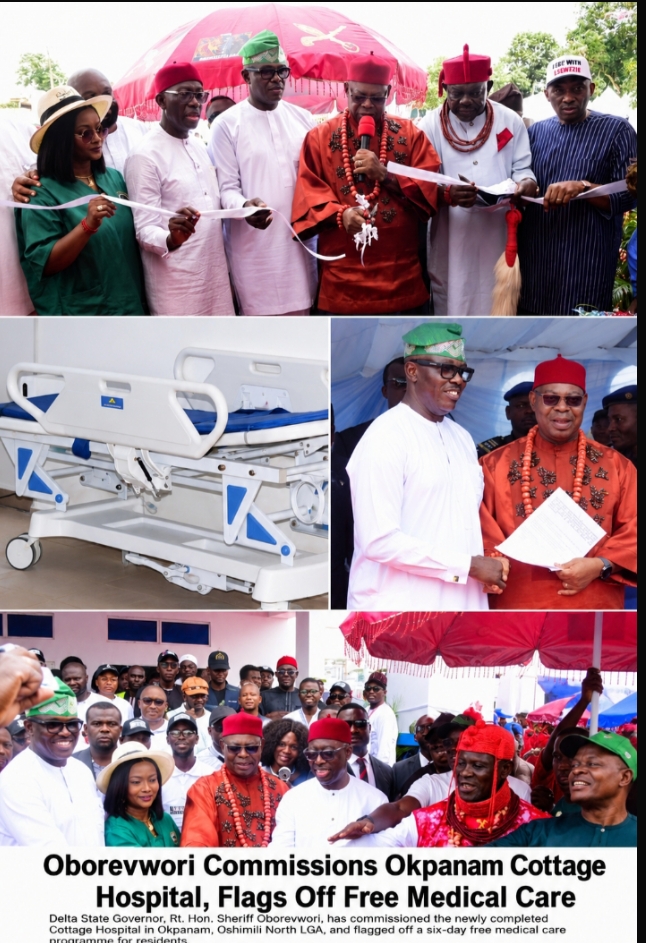
OKPANAM, Delta State — Delta State Governor, Rt. Hon. Sheriff Oborevwori, has commissioned the newly completed Cottage Hospital in Okpanam, Oshimili North Local Government Area, as part of efforts to expand access to quality and affordable healthcare at the grassroots.
The commissioning, held on Tuesday, August 25, 2026, was performed on behalf of the Governor by his Deputy, Sir Monday Onyeme, who represented him at the ceremony.
The hospital project was initiated and executed by the Oshimili North Local Government Council under the leadership of its Chairman, Chief Innocent Esewezie.
The commissioning was accompanied by the flag-off of a six-day free medical care programme for residents of the area, aimed at providing essential healthcare services to members of the community.
Speaking at the event, Governor Oborevwori said the establishment of the facility was consistent with his administration’s M.O.R.E. Agenda, particularly its commitment to meaningful development and sustainable healthcare interventions across Delta State.
According to the Governor, access to quality and affordable healthcare should not be determined by a person’s location, stressing that bringing modern healthcare facilities closer to communities would reduce the burden of travelling long distances to access medical services.
He commended the Oshimili North Local Government Council for executing the project, noting that the facility would particularly benefit pregnant women, children, elderly persons and other residents who previously had to travel farther for healthcare.
Governor Oborevwori urged residents to protect and maintain the facility so that it could continue to serve present and future generations.
The Chairman of Oshimili North Local Government Area, Chief Innocent Esewezie, said the project was conceived out of the need to improve access to basic healthcare and strengthen grassroots development.
As part of the initiative, Esewezie also announced the immediate enrolment of 200 residents into the Delta State Contributory Health Commission.
The beneficiaries include 150 members of the Oshimili North Security Watch and 50 children with special needs from communities across the local government area.
The Director-General of the Delta State Contributory Health Commission, Dr. Isaac Akpoveta, called on other local government councils to increase enrolment in the scheme as a means of making healthcare more affordable and accessible to residents.
The commissioning marks another addition to healthcare infrastructure in Delta State and highlights the growing role of local governments in delivering development projects directly to communities.
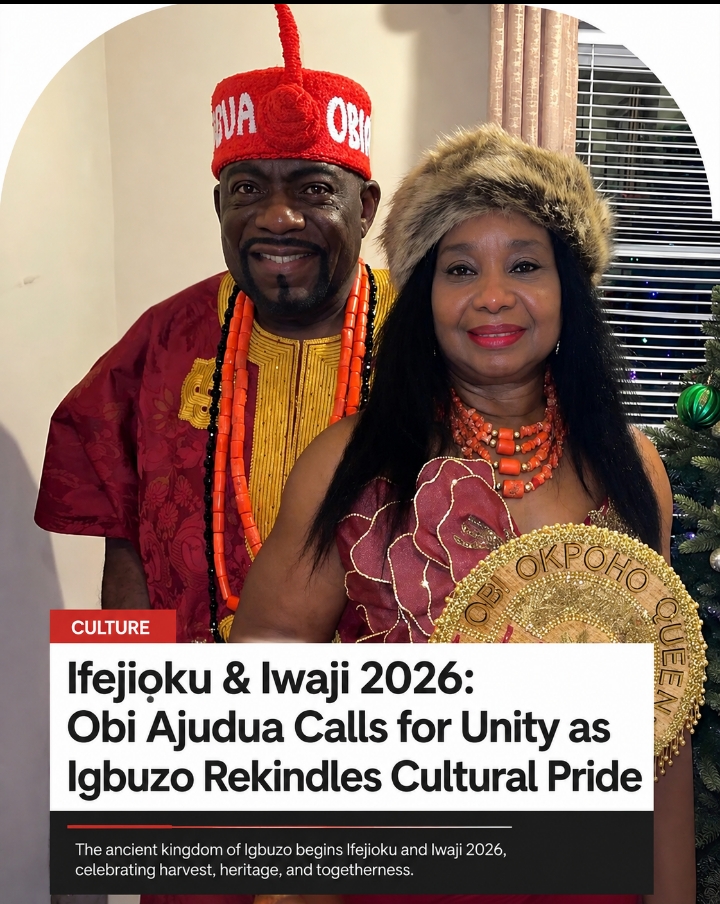
IGBUZO, DELTA STATE — The ancient kingdom of Igbuzo in Oshimili North Local Government Area of Delta State has commenced activities for Ifejiọku and Iwaji 2026, the revered New Yam Festival and harvest season celebrated as a symbol of thanksgiving, cultural identity, unity and communal prosperity.
The celebration officially commenced with Ilu Ezi Ifejiọku, a traditional community-wide sanitation and preparation exercise observed across the town’s ten Ebo, Ogbes and Idumus.
The exercise marks the beginning of one of the most significant cultural seasons in Igbuzo and the wider Anioma region.
Popularly known as “Isu na Mba Ogu” (Warriors from Isu), Igbuzo occupies a prominent place in the history and cultural heritage of Anioma and Igbo civilisation. Its reputation for courage and resilience is reflected in the popular saying, “Isu fu ogu ju nni,” which speaks to the determination and steadfastness associated with the people of Isu.
Historically, the town was known as Igbuzo, a name commonly associated with the expression “Igbo bi na uzo,” meaning the Igbo people living along the road. The name was later anglicised to Ibusa by British missionaries and colonial administrators. Despite the colonial spelling, many indigenes continue to identify strongly with the original name, Igbuzo.
Speaking on the significance of the festival, Obi (Dr.) Henry Chukwuma Ajudua, President of Vebron Carre Conglomerates, USA, described Ifejiọku and Iwaji as more than a celebration of harvest and entertainment.
According to Ajudua, the festival provides an important opportunity for the people to reconnect with their ancestors, families, kindreds and cultural heritage while expressing gratitude to God for a successful farming season.
The traditional calendar released by the Senior Diokpa of Igbuzo, Onowu Paul Ijeh, indicates that August 21, 2026, marked the commencement of Ilu Ezi Ifejiọku, a day dedicated to communal cleaning and the preparation of public spaces, pathways, compounds and traditional meeting grounds ahead of the main festivities.
Ajudua explained that the sanitation exercise goes beyond environmental cleanliness, describing it as a demonstration of collective responsibility, unity and communal pride.
He noted that preparing the community for the festival also symbolises the people’s readiness to receive the blessings associated with the harvest season.
At the heart of the celebration is yam, which occupies a central position in the cultural life of the people. Beyond its importance as a staple food, yam represents hard work, endurance, dignity, abundance and gratitude. It symbolises the reward of labour and the prosperity of the land.
As preparations intensify, Ajudua called on sons and daughters of Igbuzo, both at home and in the diaspora, to return and participate actively in the celebrations.
He urged indigenes to reconnect with their roots, visit family members, honour elders, support youth development and strengthen communal relationships.
He also emphasised the need for peace, discipline and respect for traditional institutions throughout the festivities, describing the festival as an opportunity for reconciliation, healing and a renewed commitment to the values that have sustained the community for generations.
Ajudua further stressed the importance of educating younger generations about the deeper meaning of Ifejiọku and Iwaji, noting that culture goes beyond dances, ceremonies and entertainment to encompass identity, history, responsibility and continuity.
He said Igbuzo must remain committed to protecting its traditions and cultural values at a time when communities around the world are increasingly concerned about preserving their heritage.
The festival is expected to attract indigenes from across Nigeria and the diaspora, as well as visitors and cultural enthusiasts interested in experiencing the rich traditions and heritage of Igbuzo.
Expressing optimism about the celebrations, the President of Vebron Carre Conglomerates said Iwaji 2026 would further strengthen unity among kindreds, deepen respect for traditional institutions and reinforce the collective identity of the people.
As the sacred season unfolds, prayers have been offered for abundant harvests, peace in homes, progress in the community and continued prosperity for Igbuzo people wherever they may reside.
The celebrations will continue in accordance with the traditional calendar, culminating in ceremonies honouring the land, the harvest and the enduring cultural legacy of the ancient kingdom of Igbuzo.
The Nigeria Security and Civil Defence Corps (NSCDC), Delta State Command, has intensified surveillance and patrol operations across the state ahead of the Eid-el-Maulud celebration, with a focus on protecting lives and Critical National Assets and Infrastructure (CNAI).
The State Commandant, Chinedu F. Igbo, directed officers and men of the command to step up security operations in Asaba, the state capital, and other parts of Delta State to ensure a peaceful and secure celebration.
The directive was issued to all tactical and component commanders, area commanders and divisional officers, with specific instructions to strengthen the protection of critical infrastructure, particularly facilities within the oil and gas sector.
According to the Commandant, the oil and gas industry remains a vital component of Nigeria’s economy, making the protection of pipelines, facilities and other related assets a major priority for the command.
He also ordered the strategic deployment of the Corps’ Special Forces to enhance security operations and provide maximum protection for residents and critical national assets across the state.
“As the lead agency in the protection of all Critical National Assets and Infrastructure, especially oil and gas pipelines and facilities, and all schools, our collective resolve to guarantee peace, safety and protection of lives and CNAI in synergy with other security agencies must be carried out through our collective inputs,” Igbo stated.
The Commandant urged personnel to remain vigilant and maintain effective collaboration with other security agencies throughout the holiday period.
He also felicitated with Muslim faithful in Delta State, Nigeria and across the world on the occasion of Eid-el-Maulud, wishing them a peaceful celebration.
Igbo further prayed for sustained peace, security and development in Nigeria.
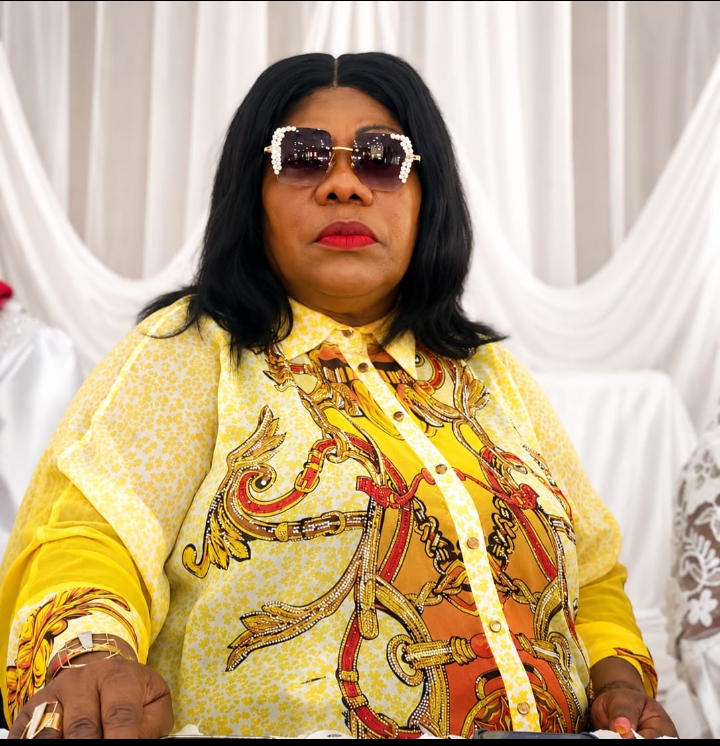
The Presidency has appointed renowned Delta State politician and former Chairman of the Nigeria Social Insurance Trust Fund (NSITF), Dr. Ngozi Olejeme, as the South-South Zonal Coordinator of the newly constituted 108-member All Progressives Congress (APC) Presidential Campaign Council.
The appointment has generated excitement among APC stakeholders and supporters across the South-South, with party faithful describing it as a strategic move that could strengthen grassroots mobilisation and political engagement ahead of the 2027 general elections.
Dr. Olejeme, who is also the Vice President-General of Ohanaeze Ndigbo Worldwide, is an experienced public administrator and APC chieftain with a history of involvement in national political assignments.
She previously served as a member of the 2023 Presidential Campaign Council and the 2026 APC National Convention Planning Committee. She is also a former Board Chairman of Trustfund Pensions Plc and has been associated with initiatives in public service, philanthropy, women empowerment and community development.
The newly constituted Presidential Campaign Council is headed by former Zamfara State Governor, Senator AbdulazizYari, as Director-General, while Imo State Governor, Senator Hope Uzodimma, serves as Secretary. President Bola Ahmed Tinubu and Vice President Kashim Shettima are to serve as Chairman and Vice Chairman respectively.
Under the campaign structure, Hon. James Abiodun Faleke will coordinate activities with zonal directors across the six geopolitical zones.
Other zonal coordinators include Senator Olushola Adeyeye for the South-West, Senator Uche Ekwunife for the South-East, Muntaqha Rabe for the North-West, Ahmed Muhammed Ketso for the North-Central, and Senator Sani Danladi for the North-East.
Reacting to her appointment, Dr. Olejeme expressed appreciation to the Presidency, APC leadership and members of the Presidential Campaign Council for the confidence reposed in her.
She described the assignment as both an honour and a call to greater service, pledging to deploy her political experience and grassroots network toward achieving the objectives of the campaign council across the South-South.
According to Olejeme, the assignment provides an opportunity to deepen engagement with communities, women, youths and other critical stakeholders while encouraging greater participation in the political process.
She also expressed support for President Tinubu’s Renewed Hope Agenda, describing the President as a determined leader committed to economic transformation and national development.
Olejeme urged Nigerians to remain united and supportive of policies aimed at strengthening the economy, creating opportunities for citizens and improving social welfare.
She further prayed for wisdom, guidance, strength and good health for President Tinubu, expressing confidence that the administration’s reform agenda would ultimately deliver lasting benefits to Nigerians.
Meanwhile, members of the Grassroots Newspaper Publishers, where Dr. Olejeme serves as Grand Matron, have welcomed her appointment.
The publishers described the development as a well-deserved recognition of her leadership qualities, grassroots appeal and commitment to public service.
They noted that her experience in public administration, philanthropy, political organisation and women empowerment places her in a strong position to coordinate campaign activities and mobilise support across the South-South geopolitical zone.
Political stakeholders have similarly described the appointment as an indication of the APC’s determination to strengthen its grassroots structures ahead of the 2027 elections.
With her new responsibility, Dr. Olejeme is expected to play a key role in coordinating the APC’s campaign activities across the South-South while mobilising women, youths and other critical stakeholders in support of the party’s presidential campaign.
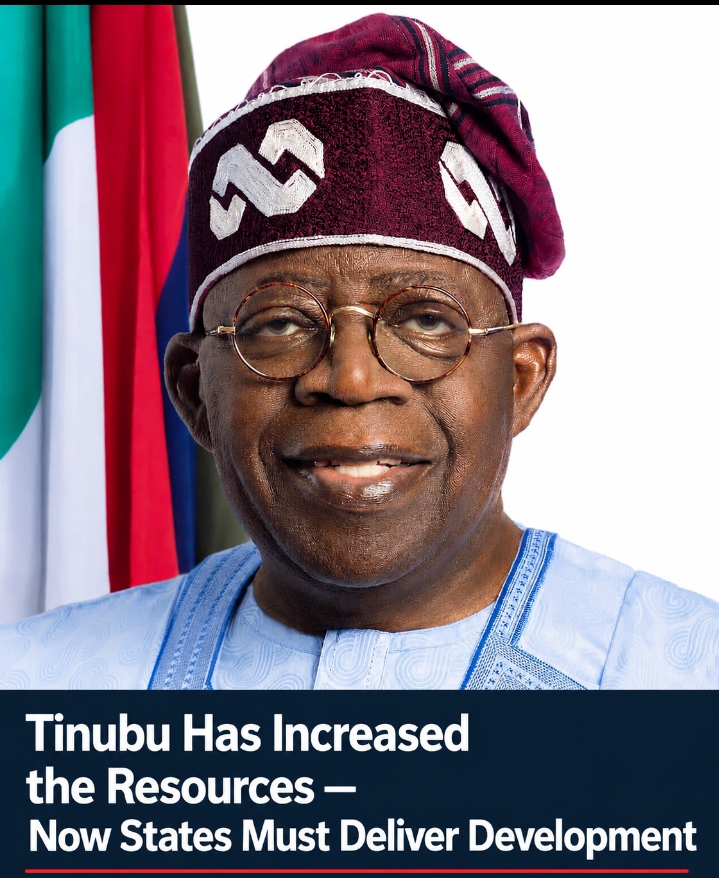
Since President Bola Ahmed Tinubu assumed office in May 2023 and removed the longstanding fuel subsidy regime, Nigerians have experienced significant economic pressures, including rising living costs and reduced purchasing power.
However, beyond the immediate hardship caused by the reforms, there is a need for a balanced assessment of their broader impact, particularly on the finances of state and local governments.
The fuel subsidy regime had for years been criticised as financially unsustainable and vulnerable to abuse. During the 2023 presidential campaign, leading political candidates acknowledged that the subsidy system could no longer be sustained indefinitely. The Tinubu administration subsequently took the politically difficult decision to remove it.
While the policy triggered widespread economic pain, one major consequence has been a substantial increase in revenue available to the three tiers of government through the Federation Account Allocation Committee (FAAC).
State and local governments now receive significantly larger monthly allocations than they did before the subsidy removal. The increase has created greater fiscal space for sub-national governments to pay salaries, invest in infrastructure and provide essential services.
This development, however, raises a fundamental question: if states and local governments now have access to more resources, why do many communities continue to struggle with poor roads, inadequate healthcare, limited access to clean water, unemployment and other basic challenges?
The answer cannot rest entirely with the Federal Government.
Many services that directly affect citizens at the grassroots level fall substantially within the responsibilities of state and local governments. Community roads, primary healthcare, markets, sanitation, local infrastructure and several aspects of education and rural development require effective action from sub-national authorities.
Before the current administration, several states faced serious financial constraints, including difficulties paying workers’ salaries and funding basic government operations. Some accumulated salary arrears, while development projects were delayed or abandoned because of inadequate revenue.
With increased allocations, governors and local government chairmen now have a greater opportunity to address some of these challenges.
The responsibility, therefore, is not simply to receive increased allocations but to demonstrate how those resources are being converted into tangible improvements in the lives of citizens.
Governments at the state and local levels should provide greater transparency about their revenues and expenditures. Citizens have a right to know how public funds are being spent and what measurable benefits are being delivered to their communities.
This does not absolve the Federal Government of responsibility. Nigerians should continue to hold President Tinubu’s administration accountable for the economic consequences of its policies and demand that the promised benefits of the reforms eventually translate into improved living standards.
But accountability must exist at every level of government.
Rather than directing every development complaint towards Abuja, citizens should also scrutinise their governors and local government leadership. Where additional resources are available, communities should reasonably expect better roads, functional healthcare centres, improved schools, job-creation initiatives, clean water and other visible development projects.
President Tinubu’s fiscal reforms have altered the revenue landscape for Nigeria’s sub-national governments. The critical question now is whether those increased resources will be managed responsibly and converted into sustainable development.
For ordinary Nigerians, the expectation is straightforward: more revenue should produce more development.
The success of the reforms should ultimately not be measured only by government revenue figures or monthly allocations, but by whether families and communities begin to experience meaningful improvements in their daily lives.
The Federal Government may provide the resources, but governors and local government authorities must ensure that those resources reach the people through responsible leadership, accountability and visible development.





 ceremony, speeches and ribbon-cutting lies a bigger story, the story of what purposeful local leadership can achieve when public resources are channelled into projects that respond directly to the needs of the people.