


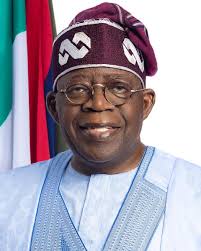
President Bola Ahmed Tinubu’s administration has highlighted a series of reforms, infrastructure projects and social interventions since taking office in May 2023.
The government says the measures are designed to reposition Nigeria’s economy, improve public revenue, expand infrastructure, support young people and strengthen security and social protection.
Among the major policy actions is the removal of the petrol subsidy and the reform of the foreign-exchange market, both of which the administration has described as necessary steps toward improving fiscal sustainability and correcting longstanding distortions in the economy.
The administration has also pointed to improvements in revenue mobilisation, foreign reserves, trade performance and investor confidence. In August 2026, President Tinubu said Nigeria was recording trade surpluses, rising foreign reserves and improved credit ratings, while stressing that the reforms were laying the foundation for longer-term economic growth.
In education, the establishment of the Nigerian Education Loan Fund (NELFUND) has become one of the administration’s flagship social interventions. The government says more than 1.5 million students had benefited, while over ₦282 billion had been disbursed by May 2026.
The administration has also introduced the 3 Million Technical Talent programme, expanded consumer-credit initiatives, supported creative-sector financing and introduced measures targeting youth employment and entrepreneurship.
Infrastructure has remained another major area of focus, with the Federal Government highlighting projects covering roads, bridges, rail transportation, ports, power and digital infrastructure. The administration has also commenced major highway projects, including the Lagos-Calabar Coastal Highway and the Sokoto-Badagry corridor.
In the power sector, the Electricity Act 2023 opened the way for greater participation by states and private-sector operators. The government has also highlighted increased generation capacity, metering initiatives and measures to address legacy debts in the electricity market.
The government has further pointed to interventions in agriculture, healthcare, social protection, mining, national identity management and security as part of its broader Renewed Hope Agenda.
On regional development, the administration has supported the establishment of development commissions for different geopolitical regions, building on existing structures such as the Niger Delta Development Commission.
The Federal Government has described these measures as part of a broader effort to transform Nigeria from a heavily oil-dependent economy into a more diversified and investment-driven economy.
However, while the administration points to these policies and projects as achievements, their impact remains a subject of public debate, particularly regarding the cost of living, inflation, employment, insecurity and the effect of economic reforms on households.
The following are 50 major initiatives, reforms and achievements attributed to the Tinubu administration:
1. Petrol subsidy removal and fiscal reform.
2. Foreign-exchange market reforms and harmonisation.
3. Measures aimed at reducing the government’s debt-service burden.
4. Clearance of verified foreign-exchange obligations.
5. Strengthening of Nigeria’s external reserves.
6. Growth in trade surplus.
7. Expansion of manufactured exports.
8. Increased non-oil revenue mobilisation.
9. Expansion of the tax base.
10. Increased FAAC allocations to states and local governments.
11. Growth in Nigeria’s capital market.
12. Comprehensive tax reforms.
13. Improved trade balance and export performance.
14. Construction of major highway corridors, including the Lagos-Calabar Coastal Highway and Sokoto-Badagry route.
15. Electricity-sector reform and greater state/private-sector participation.
16. Support for additional hydropower generation, including the Zungeru project.
17. Measures to increase electricity generation and grid capacity.
18. Development of access roads around the Second Niger Bridge and rehabilitation of key transport corridors.
19. Modernisation of major Nigerian ports.
20. Improved port revenue collection and operational efficiency.
21. Resumption of commercial operations on the Abuja Metro Rail.
22. Improved railway security and surveillance.
23. Rehabilitation and reconstruction of federal roads.
24. Continued urban infrastructure development in Abuja and other parts of the country.
25. Establishment of NELFUND and the student-loan system.
26. Expansion of NELFUND student-loan and institutional disbursements.
27. Launch of the 3 Million Technical Talent programme.
28. Expansion of digital and technology skills training.
29. Establishment and expansion of consumer-credit programmes through CrediCorp.
30. Youth-focused consumer-credit initiatives.
31. Establishment of the Creative Economy Development Fund.
32. Expansion and restructuring of the Nigeria Youth Investment Fund.
33. Increase of the national minimum wage from ₦30,000 to ₦70,000.
34. Expansion of the Compressed Natural Gas initiative and conversion infrastructure.
35. Expansion of social-protection and cash-transfer programmes.
36. Strengthening of primary healthcare interventions.
37. Development of oncology and cancer-treatment infrastructure.
38. Intervention to address international passport backlogs.
39. Presidential MSME grants and financial-support programmes.
40. Expansion of agricultural support and mechanisation programmes.
41. Deployment of tractors and other agricultural equipment.
42. Support for dry-season farming, including wheat, rice and maize production.
43. Strengthening of measures against illegal mining.
44. Increased attention to solid-mineral development and investment.
45. Support for local-government financial autonomy following the Supreme Court judgment.
46. Intensification of military operations against terrorism and banditry.
47. Continued counter-insurgency operations and surrender programmes.
48. Improved welfare, salaries and allowances for military personnel.
49. Expansion of the National Identification Number registration system.
50. Establishment and expansion of regional development commissions to promote development across Nigeria’s geopolitical zones.
The Tinubu administration has presented these reforms and projects as evidence of its effort to restructure the Nigerian economy and lay the foundation for long-term growth.
In May 2026, the Presidency said the administration had moved away from what it described as wasteful fuel subsidies, unstable exchange rates and weak infrastructure, while highlighting reforms in education, power, roads, railways, ports and oil and gas.
The government has also continued to announce new investment and infrastructure initiatives. In August 2026, for instance, President Tinubu approved a new deep-offshore investment framework that the Presidency said could unlock up to $50 billion in investment.
Whether these measures ultimately translate into sustained improvements in living standards, employment, purchasing power and public services remains one of the central tests of the administration’s record.