


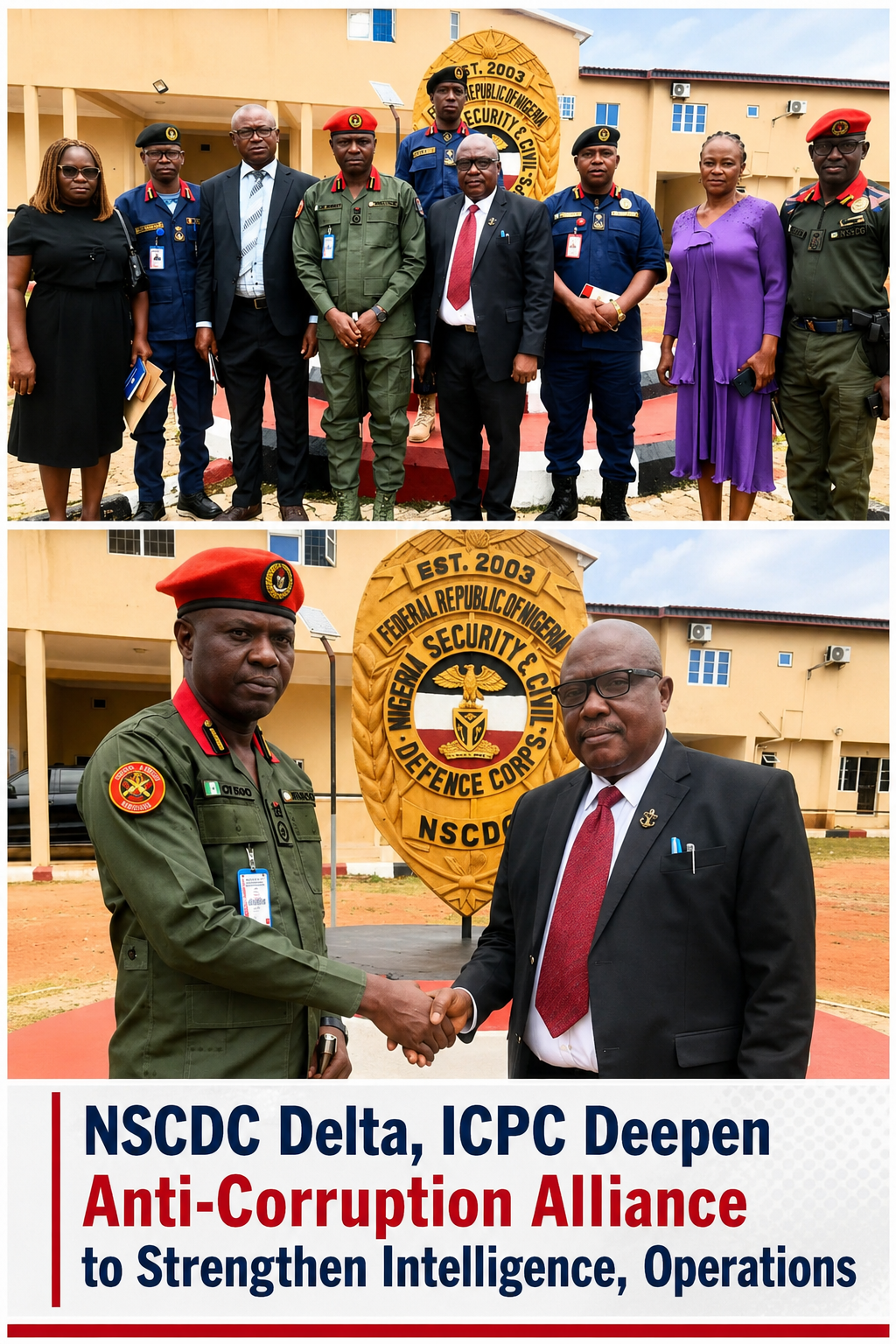
The Nigeria Security and Civil Defence Corps (NSCDC), Delta State Command, has reaffirmed its commitment to strengthening collaboration with the Independent Corrupt Practices and Other Related Offences Commission (ICPC) in the fight against corruption and related offences.
The assurance was given when the Acting Resident Anti-Corruption Commissioner (RACC) of the ICPC in Delta State, Mr. Livinus Edor, led a delegation of the commission’s management team on a familiarization visit to the NSCDC State Command Headquarters in Asaba.
Speaking during the visit, Edor commended the existing relationship between both agencies and called for deeper cooperation through enhanced intelligence sharing, surveillance, vetting, and operational support.
According to him, stronger inter-agency collaboration is essential to effectively combat corruption and other related crimes across the country.
“My visit today is to improve on the existing relationship between us. NSCDC has been our good partner in the discharge of our constitutional responsibility to fight corruption. We need to form a stronger bond, especially in operational support, strategic information sharing, intelligence gathering, vetting, and surveillance,” he said.
Responding, the Delta State Commandant of the NSCDC, Commandant Chinedu, welcomed the ICPC delegation and described corruption as a major threat to national security, capable of undermining the country’s stability, prosperity, and development.
He assured the commission of the Corps’ continued support in fulfilling its constitutional mandate, stressing that the NSCDC remains committed to promoting transparency, accountability, and good governance.
The Commandant further disclosed that the Corps operates a dedicated Anti-Corruption and Transparency Unit (ACTU), established to promote ethical conduct, detect corrupt practices, and strengthen collaboration with the ICPC to ensure public resources are effectively managed and used for their intended purposes.
He reiterated that the NSCDC would continue to work with relevant anti-corruption agencies to enhance accountability and safeguard public interest.