Home Blog Page 8

Dangote Refinery Shares Now Open to Nigerians as Investors Rush to Own a Piece of Africa’s Biggest Refinery

Lagos, Nigeria — Nigerians and other investors now have the opportunity to own a stake in the Dangote Petroleum Refinery as the company opens its shares to the public through an Initial Public Offering (IPO).

The Dangote Refinery IPO officially opened on September 14, 2026, offering 4.1 billion ordinary shares at ₦525 per share. If fully subscribed, the offer could raise about ₦2.15 trillion for the company.

What does IPO mean?

IPO means Initial Public Offering.

In simple terms, an IPO is when a privately owned company offers part of its ownership to members of the public for the first time by selling shares.

Think of it this way: instead of Dangote Refinery being owned mainly by its existing owners, the company is opening a small part of the business so that ordinary people, companies and other investors can buy shares and become part-owners.

So, if you buy Dangote Refinery shares, you are not simply giving Dangote money to keep. You are buying a small ownership stake in the company.

Why are people interested in the shares?

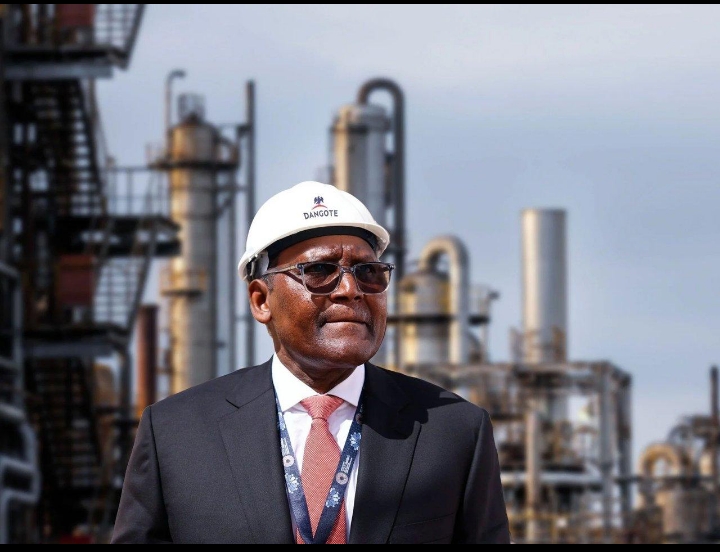
The refinery is one of Africa’s largest industrial projects and currently has a refining capacity of about 700,000 barrels of crude oil per day. The company plans to expand its capacity to 1.4 million barrels per day by 2029.

The company also reported a major turnaround in its financial performance, recording $1.82 billion in net profit in the first half of 2026, compared with a loss of $476 million in the same period of the previous year.

The money raised through the IPO is expected to support the refinery’s expansion and other growth plans.

What is the importance of buying the shares?

For an investor, buying shares means becoming a part-owner of the company.

If the company performs well over time, shareholders may potentially benefit from an increase in the value of their shares and, where declared, dividends. However, these benefits are not guaranteed. Share prices can also fall, and investors can lose money.

The IPO therefore gives Nigerians an opportunity to participate in the ownership of one of the country’s biggest industrial businesses rather than only being consumers of its products.

The minimum subscription is reportedly 10 shares, which would cost ₦5,250 at the offer price of ₦525 per share.

Dangote considers offering more shares

The strong interest in the IPO has also triggered reports that more shares could be made available to investors. BusinessDay reported on September 15 that Dangote plans additional share sales following strong investor demand.

However, investors should understand that buying shares is not the same as putting money in a savings account. There is no guaranteed profit, and the market value of the shares can rise or fall after listing.

The IPO is scheduled to close on October 13, 2026

What investors need to know about the ₦525 IPO

, while trading of the shares on the Nigerian Exchange is expected later in the year.

For anyone considering the investment, it is important to read the official offer documents, understand the risks and use only money they can afford to invest.

Why Petrol Is Still Expensive Despite Dangote Refinery — Dangote Explains

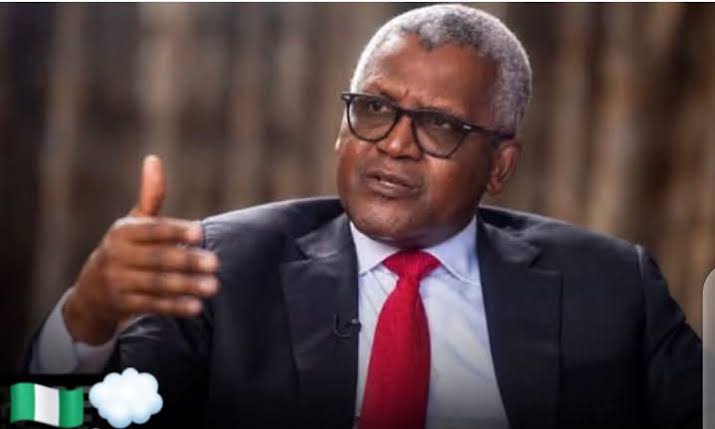
President of the Dangote Group, Aliko Dangote, has explained why petrol remains expensive in Nigeria despite increased domestic refining capacity, saying local refining does not completely shield the country from international crude oil prices and other market pressures.

Dangote made the clarification during an interview with Arise Television on Tuesday, September 15, 2026.

According to him, the Dangote Petroleum Refinery purchases crude oil at prevailing international market prices and has, at times, paid significant premiums for its feedstock.

He disclosed that the refinery bought crude at as much as $124 per barrel in May, making it difficult to sell refined petroleum products below sustainable market prices.

“We can’t go now and subsidise everything,” Dangote said, while explaining that the refinery could not indefinitely absorb the rising cost of crude.

His comments come amid renewed increases in petrol prices across Nigeria. The Dangote Refinery recently raised its petrol gantry price by ₦85, from ₦1,265 to ₦1,350 per litre, as international crude prices and product replacement costs increased.

The latest adjustment followed several price changes in recent weeks. According to Punch, the refinery’s gantry price rose by ₦185 between August 21 and September 12, 2026.

Dangote also noted that petrol remains cheaper in Nigeria than in some neighbouring countries, saying the price difference has contributed to continued cross-border smuggling.

He, however, assured Nigerians that the refinery would continue supplying the domestic market and said there would be no shortage or fuel queues from its side.

The development highlights the fact that while local refining reduces Nigeria’s dependence on imported refined petroleum products, domestic petrol prices can still be affected by international crude prices, crude procurement costs, exchange-rate movements and other market factors.

50 MAJOR ACHIEVEMENTS OF PRESIDENT BOLA AHMED TINUBU: KEY REFORMS, PROJECTS AND MILESTONES SINCE 2023

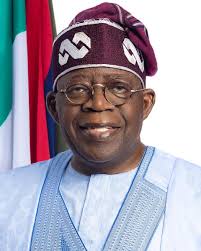
President Bola Ahmed Tinubu’s administration has highlighted a series of reforms, infrastructure projects and social interventions since taking office in May 2023.

The government says the measures are designed to reposition Nigeria’s economy, improve public revenue, expand infrastructure, support young people and strengthen security and social protection.

Among the major policy actions is the removal of the petrol subsidy and the reform of the foreign-exchange market, both of which the administration has described as necessary steps toward improving fiscal sustainability and correcting longstanding distortions in the economy.

The administration has also pointed to improvements in revenue mobilisation, foreign reserves, trade performance and investor confidence. In August 2026, President Tinubu said Nigeria was recording trade surpluses, rising foreign reserves and improved credit ratings, while stressing that the reforms were laying the foundation for longer-term economic growth.

In education, the establishment of the Nigerian Education Loan Fund (NELFUND) has become one of the administration’s flagship social interventions. The government says more than 1.5 million students had benefited, while over ₦282 billion had been disbursed by May 2026.

The administration has also introduced the 3 Million Technical Talent programme, expanded consumer-credit initiatives, supported creative-sector financing and introduced measures targeting youth employment and entrepreneurship.

Infrastructure has remained another major area of focus, with the Federal Government highlighting projects covering roads, bridges, rail transportation, ports, power and digital infrastructure. The administration has also commenced major highway projects, including the Lagos-Calabar Coastal Highway and the Sokoto-Badagry corridor.

In the power sector, the Electricity Act 2023 opened the way for greater participation by states and private-sector operators. The government has also highlighted increased generation capacity, metering initiatives and measures to address legacy debts in the electricity market.

The government has further pointed to interventions in agriculture, healthcare, social protection, mining, national identity management and security as part of its broader Renewed Hope Agenda.

On regional development, the administration has supported the establishment of development commissions for different geopolitical regions, building on existing structures such as the Niger Delta Development Commission.

The Federal Government has described these measures as part of a broader effort to transform Nigeria from a heavily oil-dependent economy into a more diversified and investment-driven economy.

However, while the administration points to these policies and projects as achievements, their impact remains a subject of public debate, particularly regarding the cost of living, inflation, employment, insecurity and the effect of economic reforms on households.

The following are 50 major initiatives, reforms and achievements attributed to the Tinubu administration:

1. Petrol subsidy removal and fiscal reform.

2. Foreign-exchange market reforms and harmonisation.

3. Measures aimed at reducing the government’s debt-service burden.

4. Clearance of verified foreign-exchange obligations.

5. Strengthening of Nigeria’s external reserves.

6. Growth in trade surplus.

7. Expansion of manufactured exports.

8. Increased non-oil revenue mobilisation.

9. Expansion of the tax base.

10. Increased FAAC allocations to states and local governments.

11. Growth in Nigeria’s capital market.

12. Comprehensive tax reforms.

13. Improved trade balance and export performance.

14. Construction of major highway corridors, including the Lagos-Calabar Coastal Highway and Sokoto-Badagry route.

15. Electricity-sector reform and greater state/private-sector participation.

16. Support for additional hydropower generation, including the Zungeru project.

17. Measures to increase electricity generation and grid capacity.

18. Development of access roads around the Second Niger Bridge and rehabilitation of key transport corridors.

19. Modernisation of major Nigerian ports.

20. Improved port revenue collection and operational efficiency.

21. Resumption of commercial operations on the Abuja Metro Rail.

22. Improved railway security and surveillance.

23. Rehabilitation and reconstruction of federal roads.

24. Continued urban infrastructure development in Abuja and other parts of the country.

25. Establishment of NELFUND and the student-loan system.

26. Expansion of NELFUND student-loan and institutional disbursements.

27. Launch of the 3 Million Technical Talent programme.

28. Expansion of digital and technology skills training.

29. Establishment and expansion of consumer-credit programmes through CrediCorp.

30. Youth-focused consumer-credit initiatives.

31. Establishment of the Creative Economy Development Fund.

32. Expansion and restructuring of the Nigeria Youth Investment Fund.

33. Increase of the national minimum wage from ₦30,000 to ₦70,000.

34. Expansion of the Compressed Natural Gas initiative and conversion infrastructure.

35. Expansion of social-protection and cash-transfer programmes.

36. Strengthening of primary healthcare interventions.

37. Development of oncology and cancer-treatment infrastructure.

38. Intervention to address international passport backlogs.

39. Presidential MSME grants and financial-support programmes.

40. Expansion of agricultural support and mechanisation programmes.

41. Deployment of tractors and other agricultural equipment.

42. Support for dry-season farming, including wheat, rice and maize production.

43. Strengthening of measures against illegal mining.

44. Increased attention to solid-mineral development and investment.

45. Support for local-government financial autonomy following the Supreme Court judgment.

46. Intensification of military operations against terrorism and banditry.

47. Continued counter-insurgency operations and surrender programmes.

48. Improved welfare, salaries and allowances for military personnel.

49. Expansion of the National Identification Number registration system.

50. Establishment and expansion of regional development commissions to promote development across Nigeria’s geopolitical zones.

The Tinubu administration has presented these reforms and projects as evidence of its effort to restructure the Nigerian economy and lay the foundation for long-term growth.

In May 2026, the Presidency said the administration had moved away from what it described as wasteful fuel subsidies, unstable exchange rates and weak infrastructure, while highlighting reforms in education, power, roads, railways, ports and oil and gas.

The government has also continued to announce new investment and infrastructure initiatives. In August 2026, for instance, President Tinubu approved a new deep-offshore investment framework that the Presidency said could unlock up to $50 billion in investment.

Whether these measures ultimately translate into sustained improvements in living standards, employment, purchasing power and public services remains one of the central tests of the administration’s record.


2027: NYCN Endorses Eshor, Backs Plan to Make Delta Nigeria’s Blue Economy Hub

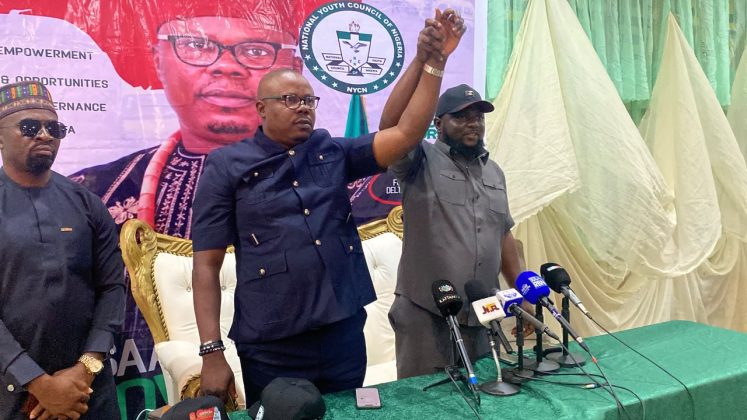
The National Youth Council of Nigeria (NYCN) has endorsed the Delta State governorship candidate of the African Action Congress (AAC), Engr. Isaac Eshor, expressing support for his proposed economic development agenda for the state ahead of the 2027 governorship election.

The endorsement was announced in Abuja during a stakeholders’ engagement attended by youth leaders from across the country, where Eshor presented proposals centred on youth employment, economic diversification and the development of Delta State’s maritime resources.

National President of the NYCN, Comrade Babangida Isah, described Eshor as a leader with the experience and innovative mindset needed to attract investments, create employment opportunities and harness Delta State’s economic potential.

Isah said the council’s position was influenced by the need for competent, accountable and development-oriented leadership capable of translating the state’s resources into sustainable opportunities for young people.

Speaking after the endorsement, Eshor said Delta State had the potential to become a major blue economy centre in Nigeria, citing opportunities in maritime transportation, fisheries, marine logistics, coastal tourism, shipbuilding and other ocean-based industries.

“Delta State has all it takes to become the blue economy capital of Nigeria. We must move beyond dependence on government revenue and fully harness our natural resources to create jobs, wealth and economic opportunities for our people,” Eshor said.

The AAC candidate also criticised what he described as years of missed economic opportunities in the state, arguing that strategic investment in the maritime and coastal sectors could expand Delta’s economy and create employment for residents.

Eshor further challenged the incumbent administration to a public debate on governance, economic development and the future of the state, saying residents should have an opportunity to compare competing ideas and development strategies.

As part of his proposed development agenda, Eshor said he would address electricity challenges through turbine-powered energy systems aimed at providing more reliable power supply across communities.

He also proposed free primary and secondary education and a monthly ₦100,000 allowance for teachers, alongside reforms in the healthcare sector.

On healthcare, Eshor promised to expand access to quality medical services and said key policies of his proposed administration would be backed by legislation to ensure continuity beyond his tenure.

The AAC candidate also placed youth empowerment at the centre of his proposed administration, linking unemployment and economic hardship to some of the social challenges confronting young people.

“When young people are gainfully employed and empowered, communities become safer, stronger and more prosperous,” he said.

The NYCN president also called for greater investment in skills acquisition, entrepreneurship and small and medium-scale enterprises, stressing that youth empowerment should go beyond political appointments.

“Empowering a young person with a skill is far more impactful than offering a temporary political position,” Babangida said.

He highlighted Eshor’s background in marine operations, logistics, entrepreneurship and youth development, saying the experience could align with the economic opportunities available in Delta State.

The endorsement comes as political parties and candidates begin to position themselves ahead of the 2027 Delta State governorship election, with youth employment, economic diversification, infrastructure and investment expected to remain major issues in the political debate.

The NYCN endorsement could add to Eshor’s profile among young voters, although the impact of the development on the wider electorate will ultimately depend on how voters assess the competing candidates and their proposed programmes ahead of the election.

2027: Urhobo Monarchs Endorse Oborevwori, Ask Rival Aspirants to Back His Second Term

0

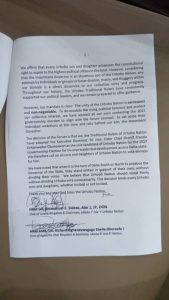
The press statement issued by Ukoko R’Ivie R’Urhobo, the Forum of Urhobo Traditional Rulers, endorsing Governor Sheriff Oborevwori as the Urhobo Nation’s sole candidate for the 2027 Delta governorship election.

The concluding page of the Urhobo traditional rulers’ statement calling on Urhobo sons and daughters to support Governor Sheriff Oborevwori in the 2027 governorship election

The Forum of Urhobo Traditional Rulers, known as Ukoko R’Ivie R’Urhobo, has endorsed Delta State Governor, Sheriff Oborevwori, as the sole candidate of the Urhobo Nation for the 2027 governorship election.

The monarchs announced the decision in a press statement issued after their meeting at the Ovie of Uvwie Palace on Thursday, September 10, 2026.

The traditional rulers said the decision followed concerns over rising political tension, rivalry and alleged political thuggery within Urhobo communities ahead of the 2027 election.

According to the statement signed by HRM Dr. Emmanuel E. Sideso, Abe 1, JP, OON, Ovie of Unwiel Kingdom and Chairman of Ukoko R’Ivie R’Urhobo, and HRM Amb. Dr. Richard Oghenevwoga Ebelle Okoreefe I, Ovie of Agbarho-Otor Kingdom and Secretary of the forum, every Urhobo son and daughter has the constitutional right to aspire to political office.

However, the monarchs said the unity of the Urhobo Nation remained “sacrosanct and non-negotiable.”

They therefore advised Urhobo governorship aspirants to set aside their individual ambitions and rally behind Oborevwori, whom they described as an illustrious son of the Urhobo Nation.

The forum also called on Urhobo people to support and vote for the incumbent governor in the 2027 governorship election.

The monarchs said their position was aimed at preventing political division within the Urhobo Nation, stressing that they had historically supported political leaders and would continue to provide guidance.

The endorsement effectively places the traditional rulers behind Oborevwori’s bid for a second term, although the statement itself represents the position of the Urhobo traditional rulers’ forum, not a decision that legally prevents other candidates from contesting the election.

Recent reports from Nigerian media have also confirmed the monarchs’ endorsement of Oborevwori as the Urhobo Nation’s preferred candidate for 2027. 

DR Congo School Fire Kills 26 Children as Pupils Jump From Windows to Escape

0

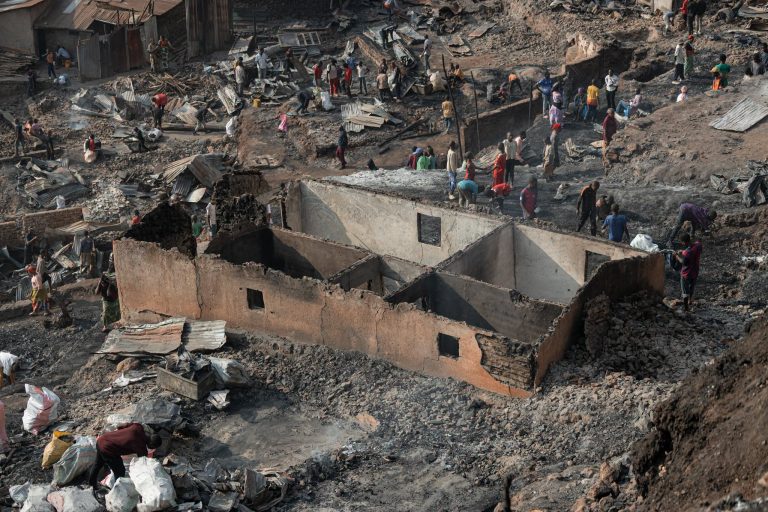
At least 26 children have been killed after a fire swept through two schools in Bukavu, eastern Democratic Republic of Congo, triggering a deadly stampede as pupils desperately tried to escape.

The fire broke out on Thursday, September 10, in a densely populated area of Bukavu before spreading from a residential building to the nearby Furaha Secondary School and Ujamaa Primary School.

According to the South Kivu provincial government, the victims comprised 19 girls and seven boys. Dozens of other pupils were injured and taken to nearby health facilities, with authorities warning that the death toll could rise.

Witnesses said the situation quickly descended into chaos after smoke and flames engulfed the area. The narrow exit at one of the schools became overwhelmed as pupils rushed to safety.

Some children reportedly jumped from windows on higher floors in an attempt to escape, while others were pushed down and trampled during the rush towards the exit. Some pupils trapped inside the buildings died from suffocation.

A teacher at Ujamaa Primary School, Simon Kasamira, said students began screaming and jumping from upper floors after the fire broke out while classes were underway.

The blaze also destroyed a large number of homes in the surrounding area. Local officials said the densely populated neighbourhood contained many wooden structures, allowing the fire to spread rapidly.

The exact cause of the fire remains unknown, and authorities have launched an investigation into the incident.

The tragedy has further strained medical facilities in Bukavu, where health workers have struggled to cope with the large number of injured pupils arriving for treatment.

The incident has sparked grief among families and residents as authorities continue efforts to identify victims, treat the injured and assess the full extent of the destruction.

2027 Presidency: INEC Releases Final List of 18 Candidates, Tinubu, Atiku, Obi, Sowore Others Cleared

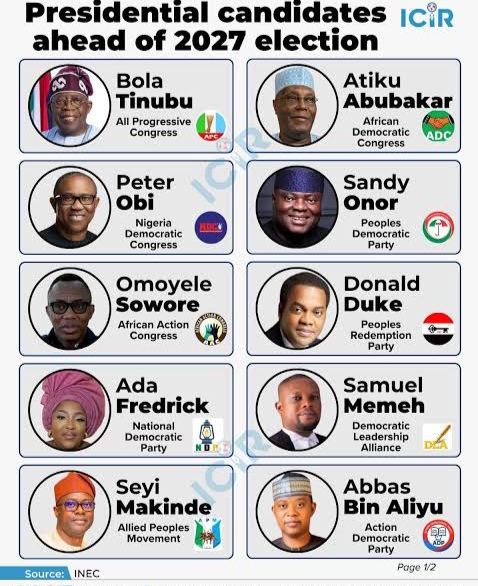
The Independent National Electoral Commission (INEC) has published the final list of presidential and vice-presidential candidates for Nigeria’s 2027 general election.

The list, released in Abuja on Saturday and signed by the Secretary to the Commission, Rose Oriaran-Anthony, contains 18 presidential candidates sponsored by 18 political parties.

The presidential election is scheduled to hold on Saturday, January 16, 2027, alongside elections into the National Assembly.

Among the prominent names on the list are incumbent President Bola Ahmed Tinubu of the All Progressives Congress (APC), former Vice President Atiku Abubakar of the African Democratic Congress (ADC), former Anambra State Governor Peter Gregory Obi of the Nigerian Democratic Congress (NDC), Oyo State Governor Oluseyi Abiodun Makinde of the Allied Peoples Movement (APM), and African Action Congress (AAC) candidate Omoyele Sowore.

Former Cross River State Governor Donald Duke is also listed as the presidential candidate of the Peoples Redemption Party (PRP), while Sandy Ojang Onor is the candidate of the Peoples Democratic Party (PDP).

Full List of Presidential Candidates and Running Mates

  1. Action Alliance (AA)
    Presidential candidate: Rufai Adekunle Omo-Aje
    Running mate: Shehu Hussaini

  2. Action Democratic Party (ADP)
    Presidential candidate: Abbas-Bin Aliyu
    Running mate: Ike Chinazam

  3. Allied Peoples Party (APP)
    Presidential candidate: Yusuf Kabiru
    Running mate: Ofordile Peace Egobia

  4. African Action Congress (AAC)
    Presidential candidate: Omoyele Sowore
    Running mate: Haruna Garba Magashi

  5. African Democratic Congress (ADC)
    Presidential candidate: Atiku Abubakar
    Running mate: Chibuike Rotimi Amaechi

  6. All Progressives Congress (APC)
    Presidential candidate: Bola Ahmed Tinubu
    Running mate: Kashim Shettima

  7. Allied Peoples Movement (APM)
    Presidential candidate: Oluseyi Abiodun Makinde
    Running mate: Musa Lawal Daura

  8. Boot Party (BP)
    Presidential candidate: Sunday Adenuga
    Running mate: Mustapha Musa Turaki

  9. Democratic Leadership Alliance (DLA)
    Presidential candidate: Moses Olusolu Adebisi
    Running mate: Nafisat Usaku Abubakar

  10. Labour Party (LP)
    Presidential candidate: Sunday Chibuizu Okereke
    Running mate: Hajja Bintu Konto

  11. National Democratic Party (NDP)
    Presidential candidate: Ada Elizabeth Frederick Okwori
    Running mate: Uchenna Anthony Chukwuemeka

  12. National Rescue Movement (NRM)
    Presidential candidate: Nkem Esther Okereke
    Running mate: Nasir Muhammed Sulaiman

  13. Nigerian Democratic Congress (NDC)
    Presidential candidate: Peter Gregory Obi
    Running mate: Musa Mohammed Rabiu Kwankwaso

  14. Peoples Democratic Party (PDP)
    Presidential candidate: Sandy Ojang Onor
    Running mate: Umaru Babadigida

  15. Peoples Redemption Party (PRP)
    Presidential candidate: Donald Duke
    Running mate: Kabiru Rubbaku

  16. Social Democratic Party (SDP)
    Presidential candidate: Adewole Ebenezer Adebayo
    Running mate: Usman Muhammed Bugaje

  17. Young Progressive Party (YPP)
    Presidential candidate: Peter Ada Agada
    Running mate: Patience Ndidi Key

  18. Zenith Labour Party (ZLP)
    Presidential candidate: Daniel Daberechukwu Nyawanwalu
    Running mate: Hassan Khalid

The INEC list shows that 16 of the 18 presidential candidates are male, while two are female — Ada Elizabeth Frederick Okwori of the NDP and Nkem Esther Okereke of the NRM. Four of the 18 vice-presidential candidates are female.

According to the published list, Atiku Abubakar, aged 79, is the oldest presidential candidate, while Moses Olusolu Adebisi of the DLA, aged 35, is the youngest.

The publication of the final list marks another major step in preparations for the 2027 presidential election, with the parties and their candidates now formally listed for the January 16 poll.

FG Announces 100MB Free Daily Data for Students From October 1

0

The Federal Government has announced that Nigerian students will begin accessing 100 megabytes (100MB) of free data daily from October 1, 2026, under a new initiative aimed at expanding access to digital education.

The Minister of Education, Dr Tunji Alausa, announced the commencement date on Thursday in Abuja during the launch of the Initiative for Zero-Rated Access to Educational Platforms and Content in Nigeria.

The programme, being implemented through collaboration between the Nigerian Communications Commission (NCC), the Federal Ministry of Education and participating telecommunications operators, will initially target students in public senior secondary schools and tertiary institutions.

Under the initiative, the 100MB daily allowance will provide zero-rated access to approved educational websites, digital learning platforms, online libraries and other authorised educational resources.

The government said the initiative is designed to address the cost of internet data, which remains a major barrier to digital learning, particularly for students from low-income households.

Alausa said the programme would initially cover selected categories of learners before being expanded to other groups.

The NCC explained that educational platforms would be jointly approved by the commission and the Federal Ministry of Education before being included in the programme.

The initiative is expected to involve major telecommunications operators, including MTN, Airtel and Globacom, which have committed to supporting the provision of free access to approved educational content.

However, the free access does not mean students will receive unrestricted 100MB data for general internet browsing. The zero-rated allowance is specifically intended for approved educational platforms and content under the scheme.

The Federal Government said the initiative is part of broader efforts to make digital education more accessible and ensure that the cost of internet connectivity does not prevent Nigerian learners from accessing quality educational resources.

2027: Court Orders INEC to Approve NDC’s Modified ‘Two-Finger’ Logo

The Federal High Court sitting in Abuja has ordered the Independent National Electoral Commission (INEC) to approve and upload the modified digital logo of the Nigeria Democratic Congress (NDC) for use in elections.

The judgment, delivered by Justice Joyce Abdulmalik on September 8, 2026, followed a suit filed by the NDC over the commission’s handling of the party’s modified logo.

The court directed INEC to approve the modified logo, including its symbol and colours, for use by the NDC as its official logo for all purposes as a political party, including elections conducted by the commission.

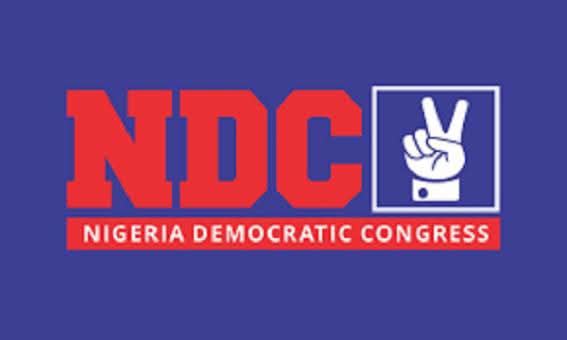
The logo features a digitally designed “two-finger victory sign” on a blue background, with “NDC” written in red.

The court also granted a perpetual injunction restraining INEC, its officers, agents and representatives from interfering with the NDC’s use of the modified logo.

The NDC had said its First National Executive Committee meeting on March 25, 2026, approved the modified design and forwarded it to INEC. According to the party, the commission initially uploaded the logo but later removed it and restored the older logo under which the party was originally registered.

The party subsequently approached the court after efforts to resolve the matter administratively failed.

Following the judgment, the NDC directed its candidates and members to adopt the approved logo on campaign materials, including banners, posters and other publicity materials.

The ruling comes as political parties intensify preparations for the 2027 general elections, where party symbols are expected to play a significant role in identifying candidates and parties on the ballot.

BREAKING: Former PDP National Chairman Bamanga Tukur Dies at 90

Former National Chairman of the Peoples Democratic Party (PDP), Alhaji Bamanga Tukur, has died at the age of 90.

Tukur’s death was confirmed by family sources on Saturday, September 12, 2026, according to reports. Details surrounding his death were not immediately available at the time of filing this report.

Born on September 15, 1935, Tukur was a prominent Nigerian businessman, politician and former public servant who held several influential positions during his career.

He served as the General Manager of the Nigerian Ports Authority between 1975 and 1982 before becoming the governor of the old Gongola State in 1983. The state was later divided into present-day Adamawa and Taraba states.

Tukur also served as Minister of Industries between 1993 and 1995 during the military administration of the late General Sani Abacha.

In March 2012, he emerged as National Chairman of the PDP, then Nigeria’s ruling party. He resigned from the position in January 2014 following months of internal crisis within the party.

Beyond Nigerian politics, Tukur played prominent roles in African business circles, including serving as Executive President of the African Business Roundtable and Chairman of the NEPAD Business Group.

His death marks the passing of a major figure who occupied important positions across Nigeria’s political, public service and business sectors. Is