


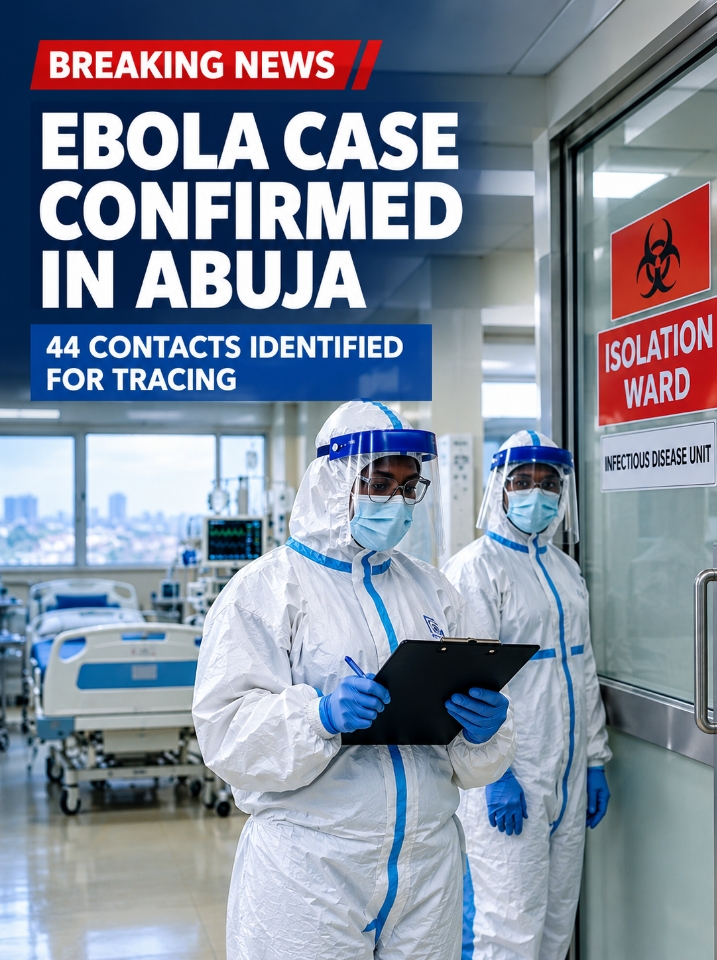
ABUJA, Nigeria — The Federal Government has confirmed one case of Ebola disease in the Federal Capital Territory (FCT), Abuja, following laboratory confirmation, with health authorities identifying 44 close contacts for tracing and monitoring to prevent further transmission.
The Coordinating Minister of Health and Social Welfare, Professor Muhammad Ali Pate, announced the development on Tuesday, October 20, 2026, in a statement outlining the government’s response to the confirmed infection.
According to the statement, the patient is a woman who recently arrived in Nigeria on an international flight from Uganda. She was subsequently admitted to a private hospital in the FCT, where she received medical care for several days before laboratory tests confirmed the infection.
The woman is currently in isolation and receiving medical treatment, while relevant health authorities intensify efforts to contain the case and prevent further spread.
FG Begins Contact Tracing
The Federal Government disclosed that contact tracing had commenced, with 44 close contacts identified so far.
The contacts include healthcare workers, patients, caregivers and travel-related individuals who may have been exposed to the infected person.
Public health teams are monitoring identified contacts while continuing investigations to establish the patient’s travel and exposure history and determine whether additional people may have been exposed.
The Federal Ministry of Health and Social Welfare is working with the Nigeria Centre for Disease Control and Prevention (NCDC), the FCT Health Services Secretariat and other relevant partners to coordinate the response.
Authorities have also intensified disease surveillance and are supporting the private hospital where the patient received treatment to strengthen infection prevention and control measures.
Health Facilities Placed on Alert
The Federal Government has urged public and private healthcare facilities nationwide to remain on high alert and promptly report suspected cases to public health authorities.
Healthcare workers have been advised to identify and isolate suspected cases without delay, maintain strict infection prevention and control procedures, and follow established public health reporting protocols.
The government also called on Nigerians to remain calm, stay vigilant and cooperate with public health officials as investigations and contact tracing continue.
Symptoms and Preventive Measures
Ebola is a serious viral disease that can spread through direct contact with the blood or other body fluids of an infected person who is showing symptoms, as well as contaminated materials.
Symptoms may include fever, severe weakness, headache, vomiting and diarrhoea.
Members of the public are advised to maintain good hand hygiene and avoid contact with the blood or other body fluids of anyone suspected of having the disease.
Anyone who develops symptoms after possible exposure should avoid close contact with others and contact public health authorities for guidance before visiting a healthcare facility.
The Federal Government said investigations were ongoing and that further updates would be provided as the response progresses.
The NCDC’s toll-free call centre, available 24 hours a day, can be reached on 6232 for information or to report a suspected case.
Health authorities continue to emphasise that early detection, effective contact tracing and public cooperation are essential to preventing further transmission.