

Home Blog Page 32

SSA on Community Newspapers, Prince Orhomonokpaye, Felicitates Governor Oborevwori on 63rd Birthday Anniversary

The Senior Special Assistant to the Governor of Delta State on Community Newspapers, Prince Joseph Orhomonokpaye, has extended warm felicitations to the Governor of Delta State, His Excellency Rt. Hon. Sheriff Oborevwori, as he marks his 63rd birthday anniversary.

In a goodwill message made available to journalists, Prince Orhomonokpaye expressed gratitude to God Almighty for His faithfulness, mercy, and abundant grace upon the life of Governor Oborevwori and his family. He described the Governor’s birthday celebration as an opportunity to appreciate God for preserving and blessing a leader who has remained committed to the growth and development of Delta State.

The SSA prayed that God would continue to endow the Governor with divine wisdom, sound health, strength, and greater grace to enable him to sustain his selfless service to the people of Delta State and Nigeria as a whole. He noted that Governor Oborevwori’s leadership style has brought renewed hope to Deltans through people-oriented policies and programmes aimed at improving the welfare of citizens.

According to Prince Orhomonokpaye, Governor Oborevwori has demonstrated exemplary leadership through his administration’s commitment to infrastructural development, human capital advancement, youth empowerment, and the strengthening of security architecture across the state. He stated that the Governor’s MORE Agenda, which focuses on Meaningful Development, Opportunities for All, Realistic Reforms, and Enhanced Peace and Security, has continued to positively impact the lives of Deltans and foster sustainable development.

He commended the Governor for his dedication to good governance, inclusiveness, and his unwavering commitment to the welfare, peace, and prosperity of the people. He added that the achievements recorded so far under the present administration are clear indications of purposeful leadership and a determination to build a stronger and more prosperous Delta State.

Prince Orhomonokpaye further expressed confidence that under the visionary leadership of Governor Oborevwori, the state would continue to witness remarkable progress in critical sectors such as education, healthcare, agriculture, road infrastructure, and economic development.

He described the Governor as a humble, accessible, and compassionate leader whose passion for service and commitment to the unity and advancement of Delta State have endeared him to many.

While wishing Governor Oborevwori many more years of good health, peace, wisdom, and fruitful service to humanity, Prince Orhomonokpaye prayed that God Almighty would continue to guide, protect, and strengthen him in the discharge of his responsibilities, and grant him greater accomplishments in his quest to deliver more dividends of democracy to the people of Delta State.
Tension Mounts in Igbuzo as Obuzor-in-Council Suspends Traditional Governance Activities

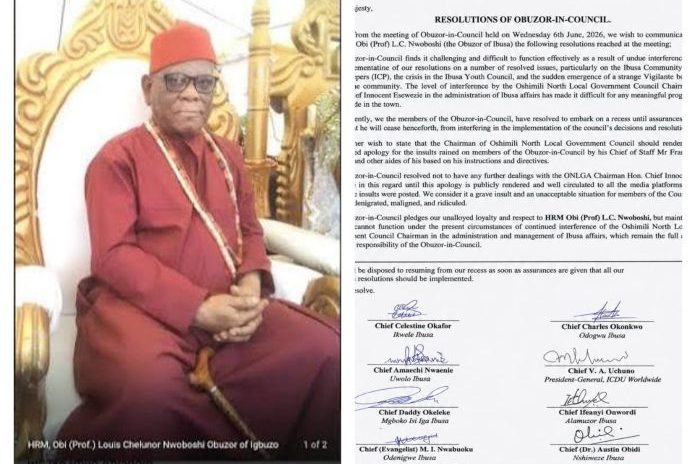
Tension is mounting in Igbuzo Kingdom, Oshimili North Local Government Area of Delta State, following a decision by the Obuzor-in-Council to suspend its participation in the traditional governance of the community over what it described as persistent interference by the political class in the affairs of the kingdom.

The development came to light after members of the Obuzor-in-Council reportedly submitted a protest letter to His Royal Majesty,(Obi) Prof. Chelunor Nwoboshi, the Obuzor of Igbuzo, expressing dissatisfaction with what they termed the growing influence of politicians in matters relating to the traditional administration of the community.

According to sources within the council, the letter informed the monarch that members of the Obuzor-in-Council would no longer participate in traditional governance activities until their grievances are addressed.

The council specifically accused the Chairman of Oshimili North Local Government Council, Chief Innocent Ifeanyi Esewezie, the Ugonwa of Igbuzo and a palace chief, of undue interference in the traditional affairs of the kingdom.

Members of the council alleged that such interference has contributed to a series of controversies and divisions within the community, particularly in relation to the affairs of the Igbuzo Youth Council, the activities of the Igbuzo Community Peacekeepers (ICP), and the emergence of what they described as a “strange vigilante group” operating within the community.

The aggrieved traditional council members maintained that the involvement of political office holders in matters traditionally reserved for the kingdom’s leadership structure has created unnecessary tension and weakened established traditional institutions.

They further declared that they would cease all official communication and traditional engagements involving the local government chairman until he tenders a public apology to the Obuzor-in-Council for actions they claimed undermined the authority, dignity, and integrity of the traditional institution.

Observers say the latest development has heightened concerns about the relationship between political authorities and traditional institutions in the community, with many residents calling for dialogue and reconciliation to prevent further escalation of the crisis.

As of the time of filing this report, there had been no official response from the palace or from Chief Esewezie regarding the allegations raised by the Obuzor-in-Council. The palace has also remained silent on the protest letter and the council’s decision to suspend participation in traditional governance activities.

Meanwhile, a respected community stakeholder, Obi (Dr.) Henry Chukwuma Ajudua, has called on all parties involved to embrace peaceful dialogue and pursue a resolution that would preserve the unity, peace, and cultural heritage of Igbuzo Kingdom.

The unfolding situation is being closely monitored by residents and indigenes, many of whom fear that a prolonged disagreement between the traditional institution and political authorities could have far-reaching implications for peace, stability, and governance in the historic kingdom.

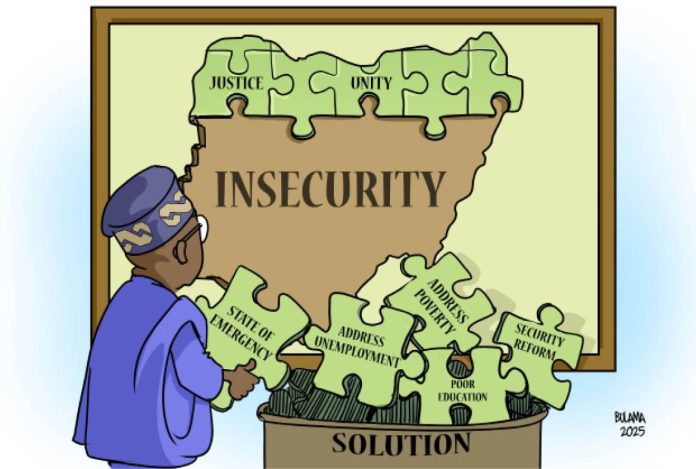
Insecurity in Nigeria: Time to Hold Grassroots Governments Accountable

As Nigeria continues to grapple with insecurity across various parts of the country, public frustration is growing. From banditry and kidnapping to communal clashes and violent crimes, many Nigerians are increasingly concerned about their safety and the future of their communities. While much of the blame is often directed at the Federal Government and President Bola Ahmed Tinubu, there is a growing argument that state governors and local government chairmen must also be held accountable for the security situation in their respective jurisdictions.

Since assuming office, President Bola Ahmed Tinubu introduced major economic reforms, including the removal of fuel subsidy, a policy that significantly increased revenue available to federal, state, and local governments. As a result, monthly allocations to states and local government councils have risen considerably, easing the financial burden that previously forced many sub-national governments to rely on borrowing to meet basic obligations such as salary payments.

Despite these increased allocations, insecurity remains a major challenge in many states and local government areas. Critics argue that while governors and local government chairmen receive substantial security votes and additional funds intended to strengthen security architecture, many communities continue to experience attacks and criminal activities with little or no effective response.

This has raised serious questions about the management and utilization of security funds at the grassroots level. Many Nigerians believe that if security votes were properly deployed toward intelligence gathering, community policing initiatives, surveillance technology, logistics support for security agencies, and youth engagement programmes, the country could witness significant improvements in public safety.

The call for greater accountability has therefore become louder. Citizens are increasingly demanding transparency in the management of security votes and advocating regular audits of funds allocated for security purposes. Such measures, they argue, would ensure that resources intended for protecting lives and property are used effectively and for their intended purposes.

Beyond the issue of funding, leadership itself remains a critical factor. One of the greatest dangers any society can face is leadership that lacks direction, vision, and strategic thinking. When leaders fail to understand the realities confronting their people, governance becomes reactive rather than proactive.
Decisions are made without proper planning, consultation, or long-term objectives, often resulting in policies that address symptoms rather than root causes.

Leadership is the engine that drives development. When that engine is weak, governance suffers. Poor leadership at the grassroots level can lead to ineffective security strategies, weak coordination among stakeholders, and a lack of urgency in responding to emerging threats.

For Nigeria to effectively tackle insecurity, responsibility must be shared across all levels of government. While the Federal Government has a constitutional role in maintaining national security, state governments and local councils also have critical responsibilities in supporting security agencies, gathering local intelligence, and addressing the socio-economic factors that often fuel crime and violence.

As the nation seeks lasting solutions to insecurity, many Nigerians are calling for a renewed focus on grassroots governance. Governors and local government chairmen must rise to the occasion by demonstrating greater commitment, accountability, and transparency in the management of public resources, particularly funds allocated for security.

The fight against insecurity cannot be won through blame alone. It requires responsible leadership, effective utilization of resources, and a collective commitment from all tiers of government. Only then can Nigerians begin to enjoy the peace and security they rightly deserve.

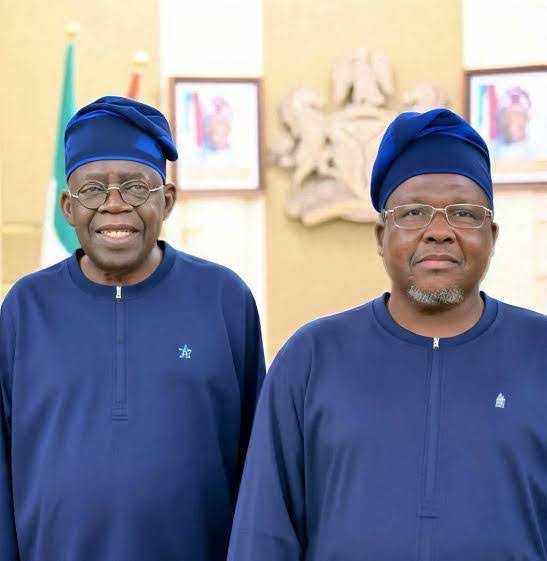
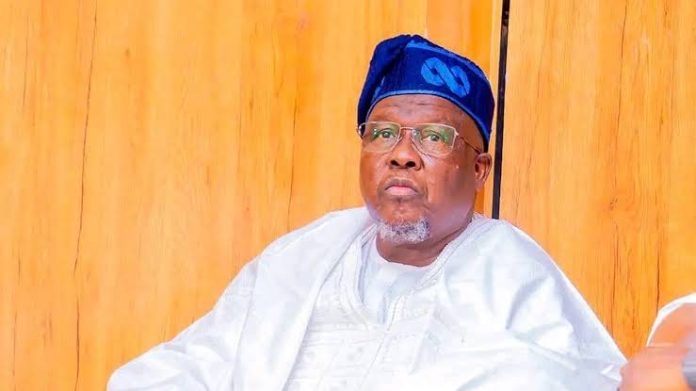
IBRAHIM MASARI: THE TRUSTED ALLY IN PRESIDENT TINUBU’S INNER CIRCLE

0

In politics, trust is a rare currency, earned through loyalty, consistency, and proven capacity. Few individuals embody these qualities more than Ibrahim Kabir Masari, the Special Adviser to President Bola Ahmed Tinubu on Political and Other Matters, whose close relationship with the President has continued to attract attention within Nigeria’s political landscape.
Often described as one of President Tinubu’s most trusted associates, Masari has steadily built a reputation as a dependable political strategist and loyal ally.

His rise within the corridors of power is not the result of chance but of years of commitment, discretion, and unwavering dedication to the political ideals and vision he shares with the President.
Masari’s appointment as Special Adviser reflects the immense confidence reposed in him by President Tinubu. Such a position demands not only political experience but also sound judgment, loyalty, and the ability to manage sensitive responsibilities. Over time, he has demonstrated these qualities, earning the respect of political stakeholders across the country.

Though he often operates away from the media spotlight, Masari’s influence has been visible in several key political engagements and consultations. His active participation in the recently concluded All Progressives Congress (APC) convention and his presence at major government and party functions underscore his growing relevance within the administration’s political architecture.

Beyond public appearances, Masari plays a crucial role in strengthening relationships between the Presidency, party leaders, political stakeholders, and grassroots actors. His ability to navigate complex political realities while remaining committed to the administration’s objectives has contributed significantly to his standing as a trusted adviser.

In governance, access to power may open doors, but retaining the confidence of those at the highest level requires competence and character. President Tinubu’s continued reliance on Masari reflects a relationship built on mutual trust and sustained by performance. Such confidence is neither accidental nor permanent; it is earned through dedication and reinforced by results.
As Nigeria’s political environment continues to evolve, there is increasing demand for leaders and advisers who combine experience with foresight, and loyalty with strategic thinking.

Ibrahim Kabir Masari represents this blend. His journey from being viewed by some as a temporary political figure to becoming a key player within the Presidency highlights both his personal capacity and the institutional trust he commands.

Leadership is not only about those who stand at the forefront of governance. It is also about those who work behind the scenes, providing counsel, building bridges, and helping to shape critical decisions. In Ibrahim Kabir Masari, President Tinubu has found more than a supporter; he has found a trusted ally, a dependable adviser, and a steady hand whose contributions continue to strengthen the administration and influence the nation’s political direction.

DSCTDA Assures Dennis Osadebay University of Infrastructure Support

The Director-General of the Delta State Capital Territory Development Agency (DSCTDA), Mr. Patrick Ukah, has assured Dennis Osadebay University (DOU), Asaba, of the Agency’s readiness to support the institution’s infrastructural development in line with its mandate as an intervention agency.

Ukah gave the assurance on Tuesday when he received the Vice-Chancellor of the university, Professor Samuel Ovuete Aghalino, alongside members of the institution’s management team during a courtesy visit to the Agency’s headquarters in Asaba.

Speaking during the visit, the Director-General described the engagement as timely and significant, stressing that collaboration between government agencies and educational institutions remains crucial to sustainable development and the advancement of Delta State. According to him, the DSCTDA was established primarily to facilitate development within the Delta State Capital Territory and is committed to fostering strategic partnerships that will contribute to the growth of key institutions across the territory.

He emphasized the importance of supporting educational institutions, noting that investment in infrastructure and human capital development remains essential to the state’s long-term progress.
Earlier, the Vice-Chancellor, Professor Aghalino, said the visit was aimed at strengthening the existing relationship between Dennis Osadebay University and the DSCTDA, while also seeking collaboration in addressing the institution’s pressing infrastructure needs.

He listed the university’s priority requirements to include access roads, classroom blocks, office accommodation for lecturers, workshops, laboratories, teaching facilities, and other instructional aids necessary for effective learning and research.
Professor Aghalino noted that the provision of world-class infrastructure would significantly enhance teaching and learning while further demonstrating the Delta State Government’s commitment to quality education and human capital development.

Responding to the requests, Ukah acknowledged the university’s needs and reiterated that, despite its role as an intervention agency, the DSCTDA would make meaningful contributions toward supporting the institution’s development within the scope of its mandate.

The Director-General also wished the Vice-Chancellor a successful tenure in office and expressed confidence that his administration would position Dennis Osadebay University among the leading tertiary institutions in Nigeria.

The visit ended with both the Agency and the university reaffirming their commitment to strengthening collaboration in the pursuit of infrastructural development, academic excellence, and the overall growth of the Delta State Capital Territory.

IBRAHIM MASARI: THE MASTER STRATEGIST BEHIND PRESIDENT TINUBU’S POLITICAL SUCCESS

In every successful administration, there are individuals whose contributions may not always dominate the headlines but whose influence is deeply felt in the corridors of power. One such figure in the administration of President Bola Ahmed Tinubu , a seasoned politician, strategist, and trusted ally whose role continues to attract admiration across Nigeria’s political landscape.

Politics often celebrates those who occupy the spotlight, but history also remembers the men and women who provide the strategic direction behind major political victories and governance successes. Ibrahim Kabir Masari belongs to this distinguished category.
Widely regarded as one of the most dependable political minds within the Presidency, Masari has earned a reputation as a loyal confidant and master strategist whose counsel remains highly valued by President.

His journey to national prominence has been defined by consistency, loyalty, and an exceptional understanding of political dynamics. Long before assuming his current role as Special Adviser on Political and Other Matters, Masari had established himself as a respected political operator capable of building alliances, managing complex political interests, and fostering unity among diverse stakeholders.

The trust President Tinubu places in him is neither accidental nor ceremonial. In politics, confidence at the highest level is earned through years of demonstrated competence, discretion, and reliability. Masari has repeatedly proven himself worthy of such confidence. His visible involvement in major political activities, including the recent APC convention and other key engagements of the administration, reflects his strategic importance within the President’s inner circle.

Observers of Nigeria’s political environment note that Masari’s influence extends beyond routine advisory duties. He is widely acknowledged as one of the administration’s key political architects, contributing ideas and strategies that help strengthen the government’s relationship with party stakeholders, political leaders, and the grassroots.

What distinguishes Masari from many political actors is his ability to combine loyalty with strategic thinking. While remaining steadfast in his support for the President’s vision, he also brings valuable insight and political experience to the decision-making process. This rare combination has made him one of the most respected advisers within the current administration.
Beyond Abuja, Masari enjoys widespread admiration in his home state , where many residents regard him as a leader with immense potential to govern the state soon. Over the years, he has cultivated strong relationships with the people through his commitment to community development, political inclusion, and public service. His accessibility and dedication to the welfare of ordinary citizens have endeared him to many across the state.

Among supporters and political observers in Katsina, there is a growing belief that Masari possesses the qualities required for higher leadership responsibilities in the future. They point to his political maturity, strategic acumen, and proven ability to build consensus as attributes that distinguish him from his contemporaries.

As Nigeria continues to navigate complex political and economic challenges, the importance of experienced and forward-thinking leaders cannot be overstated. Ibrahim Kabir Masari represents a new generation of political leadership that values loyalty, competence, and service above personal ambition.
From being initially perceived as a placeholder in Nigeria’s political conversation to becoming one of the most trusted figures within the Presidency, Masari’s story is one of dedication, resilience, and earned respect. His growing influence within the administration and his rising profile in Katsina State demonstrate the confidence that both political leaders and ordinary citizens place in his abilities.

Ultimately, every successful leader relies on a team of trusted advisers who provide guidance, support, and strategic direction. In Ibrahim Kabir Masari, President Tinubu has found more than an adviser; he has found a dependable ally, a skilled political strategist, and a committed public servant whose contributions continue to shape the course of governance in Nigeria.
For many Nigerians, particularly the people of Katsina State, Masari remains a symbol of political excellence and a leader whose best days may still lie ahead.