


ANIOCHA NORTH, DELTA STATE — The discolouration of waterways reported in parts of Aniocha North Local Government Area of Delta State in 2024 raised concerns about water quality, public health and environmental accountability, prompting questions about the possible role of mining activities and the findings of government investigations.
The controversy, which involved reported concerns about waterways in Ukwu-Nzu and references to other communities, including Obomkpa and Ugboba, brought competing explanations into focus.
Residents reportedly raised concerns in February 2024 about muddy, brownish water in the Odo and Ojokpa waterways in Ukwu-Nzu. Reports by The Guardian, Punch and Nigerian Tribune documented the controversy, including allegations linking the discolouration to nearby coal-mining operations involving Mosra Energy Limited.
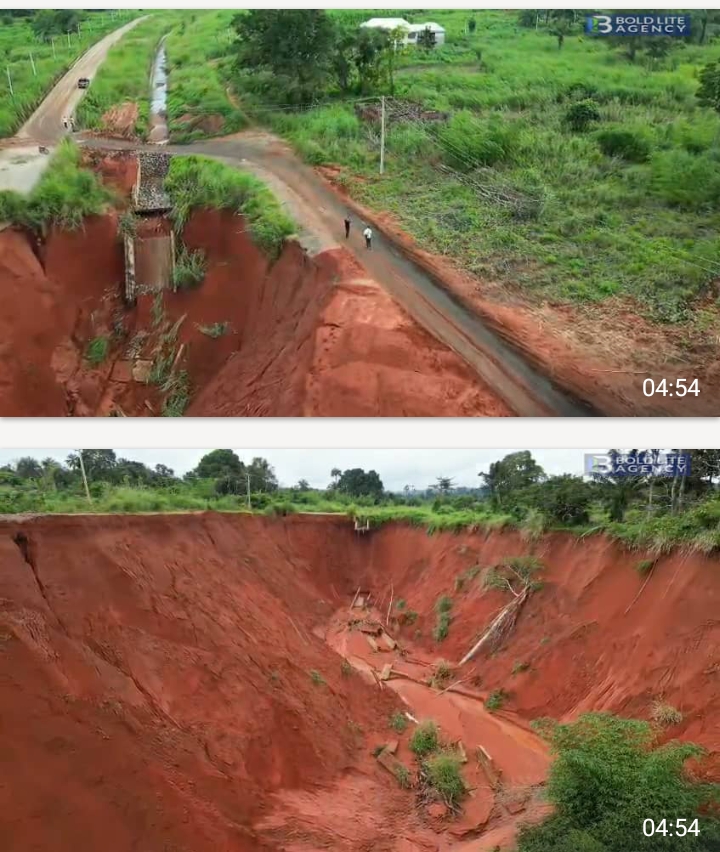
The company denied responsibility and attributed the change to erosion-control drainage. A subsequent report offered a different explanation, attributing the discolouration of Ojeokpa stream to localised earth movement associated with a landslide.
The competing accounts raise important questions about what the investigations established, whether the underlying technical records are publicly available and what can be verified about the affected waterways today.
When the Water Changes, Life Changes With It
For communities that depend on nearby waterways, a sudden change in water colour can raise concerns about health, livelihoods and environmental safety.
When a familiar water source changes appearance, residents need reliable information about its condition and the possible causes. Competing explanations alone cannot settle those concerns; independent testing and transparent findings are essential.
The 2024 controversy illustrates the importance of distinguishing between community allegations, company responses, official statements and independently verifiable scientific evidence.
What Residents Reported
Reports published in February 2024 documented concerns among residents of Ukwu-Nzu about the appearance of the Odo and Ojokpa waterways and fears about possible health implications.
Community representatives also reportedly raised questions about access to potable water.
However, the reports reviewed for this article do not independently establish the number of households affected, the extent of any disruption to water access or whether residents subsequently received adequate alternative water supplies.
Further reporting involving residents’ accounts, dated photographs, correspondence with relevant authorities and records of subsequent interventions could help establish the incident’s impact and whether conditions changed over time.
The geographical record also requires clarification. Earlier reports principally referred to Odo and Ojokpa, while a subsequent report mentioned Ojeokpa stream.
The relationship between these locations and other waterways, including Otu and Iyi Osha, should be established through reliable geographical records and local testimony before they are presented as part of the same incident.
Similarly, the specific connection between Obomkpa, Ugboba and the waterways at the centre of the February 2024 reports requires further verification.
What the Delta Government Reportedly Did
On March 1, 2024, Punch reported that the Delta State Government had confirmed the discolouration and collected water samples for laboratory analysis.
The then Commissioner for Environment, Jamani Ejiro, reportedly said the state would conduct water and effluent analysis to investigate the cause.
That report documents an announced sampling exercise. However, the final laboratory results and complete findings have not been established from the reports reviewed for this article.
Access to the relevant records would help clarify the locations sampled, the parameters tested, the laboratory methods used and the conclusions supported by the evidence.
Without those documents, the scope and findings of the announced investigation cannot be independently assessed.
Later Report Offers a Different Explanation
On April 2, 2024, The Story reported that a government expert assessment had concluded that Mosra Energy Limited’s mining activities were not responsible for the discolouration of Ojeokpa stream.
According to that report, the discolouration was attributed to localised earth movement associated with a landslide. The publication also quoted a coordinator of the Nigeria Erosion and Watershed Management Project (NEWMAP), who reportedly rejected suggestions that laterite used in the project’s construction work had caused the discolouration.
This account is important because it presents an alternative explanation for the incident and a reported conclusion that differs from the allegations raised by residents.
Nevertheless, the underlying assessment and laboratory records have not been independently examined for this article. Consequently, the sampling locations, testing methods, parameters examined and technical reasoning behind the reported conclusion remain matters requiring documentary clarification.
A change in water colour does not, by itself, establish chemical contamination or identify its source. Equally, a reported finding that mining was not responsible does not automatically establish that the water was safe for every intended use.
Those are separate questions that require appropriate scientific evidence.
Water Quality and Public Health: What Is Known?
A February 2024 report by The Guardian carried a community claim that hundreds of people had contracted cholera.
That figure should not be treated as a verified outbreak count or as proof that the affected waterways caused illness without corroborating public-health records.
Establishing whether an outbreak occurred, determining the source of any reported infections and assessing whether contaminated water played a role require reliable health records and appropriate epidemiological investigations.
Likewise, determining whether the waterways were contaminated would require suitable water-quality testing.
The reports reviewed for this article do not establish that the reported illnesses were caused by the discolouration. They also do not establish whether the waterways are safe today.
Assessing their present condition would require current samples collected using appropriate procedures and analysed by a competent laboratory, with the sampling locations, dates, parameters and limitations clearly documented.
Who Must Provide Answers?
The Delta State environmental authorities should clarify whether the laboratory analysis announced in March 2024 was completed and whether the results, final assessment and records of subsequent inspections or interventions can be made publicly available.
Relevant environmental and mining regulators should explain what inspections or compliance assessments were undertaken following the complaints and whether additional monitoring or corrective action was required.
Mosra Energy Limited should be given an opportunity to provide an updated account of the incident and supporting documentation, including any independent water-quality analyses, relevant drainage records and information about subsequent environmental monitoring.
Residents and community representatives should also have an opportunity to provide first-hand accounts, dated photographs and correspondence that could help establish the locations affected and the sequence of events.
Any reports of illness should be handled sensitively, with personal medical information protected.
Official statements, company denials and community allegations are all relevant to the public record. However, each should be assessed against appropriate supporting evidence rather than treated as conclusive on its own.
Any claim that litigation was instituted over the controversy should also be supported by identifiable court records or reliable confirmation of the case and its current status.
What Remains Unresolved?
The historical reporting establishes that residents raised concerns about discoloured waterways in early 2024, Mosra Energy Limited denied responsibility, the state announced water sampling, and a subsequent media report described a government assessment attributing the discolouration to another cause.
However, several important questions remain:
– Were the laboratory tests announced in March 2024 completed, and where are the results?
– Which waterways and specific locations were examined?
– What parameters were tested, and what did the results establish?
– What evidence supported the reported conclusion that mining was not responsible?
– Were further inspections, environmental monitoring or corrective measures undertaken?
– What is the present condition of the affected waterways?
– Were the reported public-health concerns independently investigated?
– What evidence connects Obomkpa and Ugboba to the specific waterways examined in the 2024 reports?
These unanswered questions do not establish wrongdoing by Mosra Energy Limited or any other party. They identify areas where further documentation, independent verification and responses from relevant stakeholders could improve public understanding.
Community Voices: Following the Evidence
For residents of Ukwu-Nzu and other communities identified in the reporting, establishing the documentary record of the 2024 incident is an important step towards resolving lingering questions.
That process requires listening to residents, examining the underlying technical reports and seeking substantive responses from the company and relevant authorities.
Any new findings should be assessed against verifiable evidence and reflected in subsequent reporting.
The objective is not to reach a predetermined verdict against any individual, company or institution. It is to clarify what happened, establish what the investigations actually found and determine whether appropriate environmental oversight and follow-up measures were undertaken.
When communities raise concerns about the water they depend on, transparent investigations and accessible evidence are essential to public confidence.
THE COST OF COAL — PART 1
Community Voices — Where Communities Speak. Where Accountability Begins.
Editorial Note: This report examines historical allegations and published accounts of the 2024 water-discolouration controversy in Delta State. The underlying laboratory results and complete government assessment have not been independently verified for this publication. Allegations are presented as reported claims, not established findings. Relevant parties should be given an opportunity to respond to outstanding questions.